
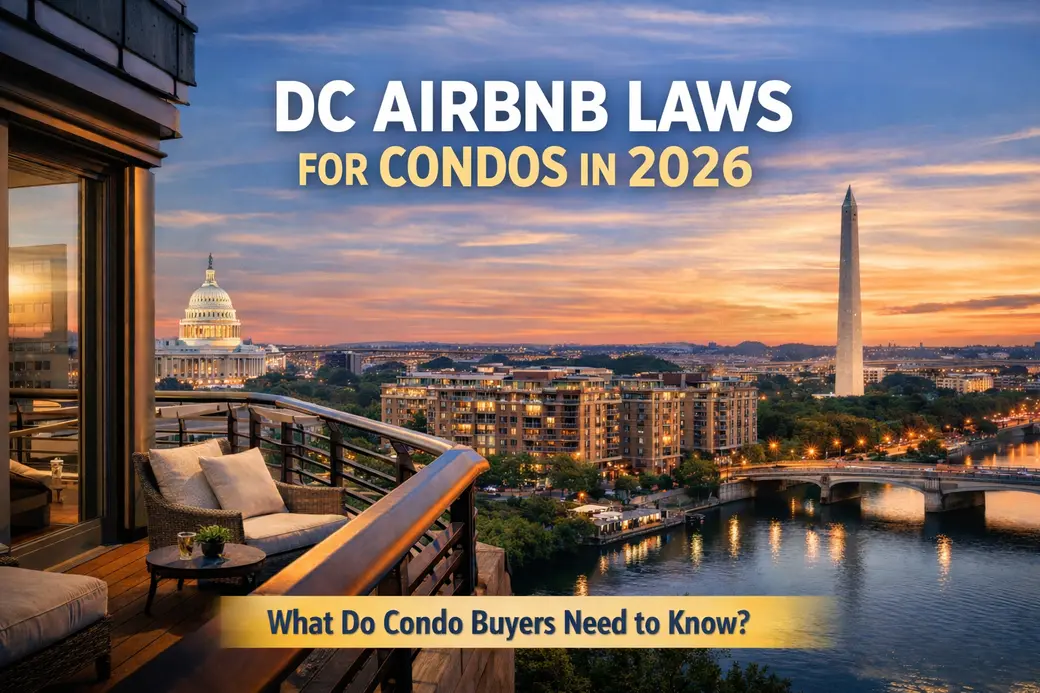
DC Airbnb Laws for Condos in 2026: What Buyers Must Know
TLDR
- DC allows short-term rentals only in your primary residence with strict rules.
- Whole-home rentals are capped at 90 nights annually without the host present.
- Condo bylaws can be stricter than city law, including outright Airbnb bans.
- Budget for licensing, taxes, insurance, and HOA rules before buying a condo.
What do DC Airbnb laws really mean for condo buyers in 2026?
If you are buying a condo in Washington DC with hosting in mind, the short-term rental rules are clear and enforced. DC’s Short-Term Rental program requires that the property be your primary residence and that you obtain the correct city license. Whole-home rentals when you are not home are limited to a 90-night annual cap, while host-present stays can be more flexible if building bylaws allow them.
Understanding the market backdrop matters too. According to recent data from Bright MLS, the DC metro finished 2025 with a regional median sale price near $640,000, up roughly 2.4% year over year, while active listings were significantly higher than last year and months of supply hovered around 2.8. Homes averaged close to 98% of final list price, and December saw fewer over-ask sales than in the recent past. Mortgage rates eased from 2024 highs but remained elevated, with the average 30-year fixed hovering near the mid-6% range per FRED. A more balanced market gives buyers time to properly diligence condo rules, licensing steps, and realistic revenue projections.
Here is how I sum it up as an expert on DC condos:
- DC permits short-term rentals in your primary residence with a city license.
- Whole-unit rentals are capped at 90 nights annually if you are not present.
- Your condo association’s bylaws can restrict or prohibit any short-term rentals.
How do short-term rental rules work in Washington DC condos?
DC’s Department of Buildings oversees licensing and enforcement. To host legally, you must live in the condo as your primary residence, secure a Short-Term Rental license, and in many cases add a Vacation Rental endorsement if you plan to rent your entire unit when you are away. The city caps non-host-occupied nights at 90 per calendar year. Host-present stays, where you remain on site, are generally not capped but must still comply with all licensing and building rules. Learn more on the DC Department of Buildings short-term rental licensing page.
Condo associations in neighborhoods like Dupont Circle, Capitol Hill, and Navy Yard often publish separate rules that can be narrower than city law. Many buildings ban short-term rentals outright, limit them to a small percentage of units, or allow only host-present stays with strict check-in procedures. You will also need to comply with District taxes for transient accommodations and register for a Basic Business License as applicable through the DC Department of Licensing and Consumer Protection and file taxes with the DC Office of Tax and Revenue.
What about co-ops and mixed-use buildings?
Co-ops across DC often prohibit short-term rentals because they prioritize owner occupancy and building stability. Mixed-use buildings with ground-floor retail may have additional insurance and security requirements, front-desk policies, and bylaws that strictly regulate guest access. Always review the full bylaws, house rules, and recent board meeting minutes before you write an offer.
Which neighborhoods and building types are best for different buyer goals?
The right neighborhood depends on whether you plan host-present stays, limited whole-unit rentals under the 90-night cap, or no short-term rentals at all. As a DMV Realtor and condo specialist, I tailor the search based on your goals and each building’s bylaws.
- Dupont Circle
Historic buildings, strong demand for boutique hospitality feel, close to Metro and restaurants. Things to look out for: Older associations sometimes prohibit STRs; front-desk buildings monitor guest access closely. Typical timeline: With balanced conditions, expect 45 to 60 days from offer to close, plus 2 to 4 weeks for licensing.
- Capitol Hill
Rowhouse-style condos and small buildings near Eastern Market attract weekend visitors and professionals. Things to look out for: HOA rules vary widely; some limit STRs to host-present only. Noise and stairwell egress rules are enforced. Entry-level path: Consider a one-bedroom owner suite with occasional guest-space hosting to stay within rules.
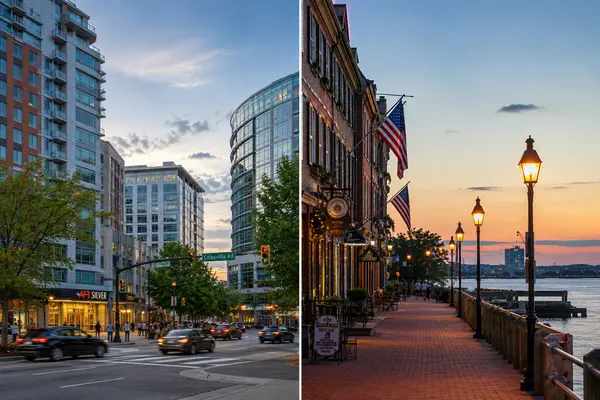
- Navy Yard and The Wharf/Southwest Waterfront
Newer buildings, concierge, and amenities near stadiums and waterfront. Strong demand on event weekends. Things to look out for: Many larger HOAs restrict STRs entirely or require longer minimum lease terms. Verify enforcement history. Typical timeline: 60 to 75 days total, factoring mortgage underwriting and any HOA addendum approvals.
- Logan Circle and Shaw
Walkable blocks, nightlife, and dining draw. Some boutique condos allow limited hosting with board notice. Be on the lookout for: Noise policies, guest registration, and fob access rules can limit check-in flexibility. Entry-level path: If bylaws allow, start with host-present stays to test demand before using any 90-night allotment.
Not every condo will suit an Airbnb strategy. That is why buyers who are serious about buying a home in the DMV and hosting work closely with a local expert. My team at KJAX Group helps you screen building bylaws in advance to avoid surprises after closing.
What are the pros and cons of buying a DC condo for Airbnb?
Pros:
- Supplemental income can offset HOA dues and mortgage interest when compliant.
- Host-present stays allow flexibility without using your 90-night cap.
- Strong year-round visitor demand in transit-rich neighborhoods with dining and attractions.
Cons:
- Primary residence requirement and 90-night cap limit full-time hosting.
- Many condo associations prohibit or tightly restrict short-term rentals.
- Taxes, licensing, and insurance add complexity, recordkeeping, and carrying costs.
How do I evaluate, budget, and stay compliant before I buy?
Start your analysis with the building’s strata documents and the city’s licensing rules. As the best listing agent near me is often asked to do, I reverse engineer the strategy: first the rules, then the numbers. According to Bright MLS, the DC metro saw inventory increase meaningfully in late 2025, with months of supply near 2.8 and average days on market around 60. That breathing room helps us negotiate and conduct thorough due diligence.
Budget for startup and operating costs:
- City licensing and endorsements: plan roughly $75 to $200 in initial fees depending on license specifics.
- Basic Business License registration and renewals as required by DC.
- Insurance rider or short-term rental policy, which can add $300 to $700 annually depending on coverage.
- Furnishings, linens, safety equipment, and smart locks, often $2,500 to $7,500 for a one-bedroom.
- DC lodging and sales taxes remitted through OTR. Confirm current tax rates before launching.
Process checklist I use with buyers:
- Confirm primary residence eligibility and occupancy intent.
- Order and review condo bylaws, house rules, amendments, budget, and meeting minutes for the last 12 to 24 months.
- Verify any rental caps, guest registration, fob policies, and minimum lease terms.
- Underwrite conservative revenue scenarios that obey the 90-night cap for whole-unit stays.
- Obtain pre-approval that accounts for HOA dues and any lender occupancy requirements.
- Apply for licensing via DC Department of Buildings after closing.
- Set up tax accounts with OTR and bookkeeping for quarterly remittances.
One of my clients purchased a one-bedroom in Logan Circle with a concierge building that allowed host-present stays but banned whole-unit hosting. We structured the purchase around their hybrid remote work schedule. They hosted about six nights a month while present, offsetting roughly 30% of their HOA dues within the first year, all fully compliant.
Another client in Navy Yard hoped for full-time hosting. After reviewing bylaws, the building prohibited STRs entirely. We pivoted to a nearby boutique condo that allowed limited whole-unit nights. They now use 60 to 70 of their 90 nights for peak events and holidays, with strong oversight and no violations.
A final word on lending and rates. Mortgage underwriting remains sensitive to occupancy and HOA rental policies. Rates in late 2025 averaged near the mid-6% range per FRED, which affects your monthly outlay and break-even. Build cushion into your projections and assume compliance costs increase over time.
FAQs
1) Can I buy a non-primary condo in DC and Airbnb it full time? No. DC’s program requires that your short-term rental be your primary residence. Whole-home rentals when you are not present are limited to 90 nights per year. Purchasing an investment-only condo for year-round short-term rental use will not qualify. You would need to consider a traditional long-term lease if the building and DC law allow it.
2) What documents should I review to confirm condo eligibility before I make an offer? Ask for the full bylaws, all amendments, house rules, rental or leasing policies, and the past 12 to 24 months of board meeting minutes. Confirm any rental cap percentages, guest registration rules, minimum lease terms, fob access rules, and fine schedules. Request the building’s insurance summary and any short-term rental resolutions adopted by the board.
3) How long does it take to get licensed in DC after closing? Most buyers should plan on 2 to 4 weeks for the short-term rental license, assuming your documentation is complete. Some cases are faster, while others take longer if the city requests additional verification or if condo management must provide specific letters. Build an extra buffer if you plan to host around major events.
4) Are host-present stays subject to the 90-night cap? Generally, the 90-night cap applies to non-host-occupied stays where you are away and the entire unit is rented. Host-present stays are not typically capped by the city, but your building can impose limits or ban them entirely. Always confirm the definition of host-present in your condo rules and how the building enforces guest access.
5) What are typical startup costs for a one-bedroom condo Airbnb setup? Budget for licensing and business registration, usually under a few hundred dollars, plus safety equipment like smoke detectors and fire extinguishers. Furnishing, linens, and smart locks can run $2,500 to $7,500 depending on quality. Add a short-term rental insurance rider, often $300 to $700 annually, and set aside funds for taxes, cleanings, and platform fees.
6) Can I use projected Airbnb income to qualify for my mortgage? Most lenders require stable, documented income history, and many will not count short-term rental projections. If you have prior documented hosting income from the same property type, a lender might consider a portion. Underwriting varies widely. Speak early with your loan officer, and plan your purchase to qualify without relying on unseasoned hosting income.
7) What happens if my condo board changes rules after I buy? Boards can change rules, and grandfathering is not guaranteed. Some buildings allow existing hosts to continue for a period, while others require full compliance with new policies. The best strategy is risk management. Choose buildings with a stable policy history, read minutes carefully, and have an exit plan that works with long-term leases if rules tighten.
Conclusion
The bottom line: DC’s short-term rental laws are aggressive, and condo bylaws can be even stricter. To succeed, align your strategy with the city’s primary residence requirement, respect the 90-night cap for whole-unit stays, and choose a building whose rules match your goals. A balanced 2025 market, per Bright MLS, gives buyers time to diligence documents, licensing steps, and conservative revenue modeling. As Kelly Jackson, team leader for KJAX Group, my role as a trusted DMV Realtor is to help you find the right condo, stay compliant, and protect your investment. If you are buying a home in the DMV, let’s build a plan that works in any market.
Kelly Jackson is a top-producing DC, Maryland, and Virginia Realtor with over 24 years of experience, providing data-driven insights and strategic guidance for buyers and sellers across the DMV.
Categories
- All Blogs (114)
- Affordability and Cost of Living (13)
- Andrews Air Force Base (3)
- AS IS Home Sale (3)
- Baltimore County Real Estate (1)
- Baltimore Homes (2)
- Baltimore Real Estate (2)
- Buyer Education (5)
- Buyer Guides (16)
- Buyer Representation (2)
- Buyer Resources (4)
- Buyer Strategy (11)
- buying a home (8)
- Buying a Home Near DC (6)
- Camp Springs Real Estate (1)
- Capitol Hill DC (4)
- Charles County MD (4)
- Charles County Real Estate (4)
- College Housing Strategy (1)
- Condo & Co-op Living (2)
- Condo Living (5)
- DC Commute Times (2)
- DC Home Values (7)
- DC Market Trends (7)
- DC Neighborhood Insights (9)
- DC Neighborhoods (12)
- DC Real Estate Market (25)
- DC Relocation (6)
- DC Waterfront (1)
- DMV Buyer Strategy (9)
- DMV HOAs (3)
- DMV Housing Market (6)
- DMV Market Guides (2)
- DMV Neighborhoods (7)
- dmv real estate (24)
- Dumfries VA Real Estate (2)
- Expired Listings (1)
- Fairfax County Real Estate (2)
- Financing & Mortgage Guidance (1)
- First Time Home Buyers (4)
- Fort Belvoir (1)
- Fort Detrick Military Relocation (5)
- Fort Detrick PCS (5)
- Fort Washington MD (2)
- Fort Washington MD Real Estate (1)
- Frederick County Real Estate (3)
- Georgetown DC Realty Estate (1)
- Historic DC Communities (1)
- Home Buying Advice (4)
- Home Buying Education (2)
- Home Buying in Washington DC (8)
- Home Buying Strategies (2)
- Home Buying Tips (2)
- Home Improvement ROI (2)
- Home Prep (1)
- Home Preparation for Selling (1)
- Home Selling Advice (11)
- Home Selling in Washington DC (14)
- Home Selling Process (2)
- Home Selling Strategy (8)
- Home Selling Timelines (5)
- Home Value & Pricing (1)
- Home Value Pricing & Strategy (1)
- Home Value Trends and Forecast (1)
- House Hacking & Investment (1)
- Investor Education (1)
- Local Market Insights (2)
- Luxury Adjacent Homes (1)
- Luxury Home Selling (1)
- Market Conditions (1)
- Maryland Communities (10)
- Maryland Home Buyers (15)
- Maryland Home Sellers (17)
- Maryland Home Values (1)
- Maryland Homeowners (5)
- Maryland Neighborhoods (11)
- Maryland Real Estate (30)
- Montgomery County MD (9)
- Montgomery County MD Housing Market (6)
- Mortgage and Financing (2)
- National Harbor MD (1)
- Neighborhood Guides (8)
- Net Out Sheet (1)
- New Construction Homes (1)
- Northern VA Home Buyers (17)
- Northern Virginia Buyers (15)
- Northern Virginia Home Sellers (23)
- Northern Virginia Real Estate (35)
- Oxon Hill MD (1)
- PCS Housing Guide (5)
- Petworth DC Home Prices (1)
- Petworth DC Real Estate (2)
- PG County Real Estate (6)
- Prince George’s County Real Estate (11)
- Prince William County Real Estate (5)
- Real Estate Advice (2)
- Real Estate Closings (1)
- Real Estate Contracts (1)
- Real Estate Market Insights (4)
- Real Estate Negotiation and Strategy (2)
- Real Estate Strategies for Home Sellers (9)
- Reat Estate Strategy for Sellers (7)
- Relocation & Moving to Northern Virginia (17)
- Relocation and Military Housing (17)
- Rockville MD Real Estate (1)
- Sell Maryland Home (7)
- Seller Education (14)
- Seller Resources (7)
- Seller Strategy (14)
- Seller Success Stories (1)
- Silver Spring Real Estate (2)
- Smart Buying Strategies (2)
- Southern MD Real Estate (2)
- Stafford County Real Estate (3)
- student loans (1)
- Triangle VA Real Estate (1)
- USDA Loans DMV (1)
- VA Home Loans (2)
- VA Loan Purchase (2)
- VA Market Insights and Trends (4)
- Virginia Home Selling Guide (3)
- Washington DC Real Estate (20)
- Washington DC Sellers (8)
- Wealth Building (1)
- Where to Live in Northern Virginia (8)
- Woodmore MD (1)
- Zero Down Payment Programs (1)
Recent Posts