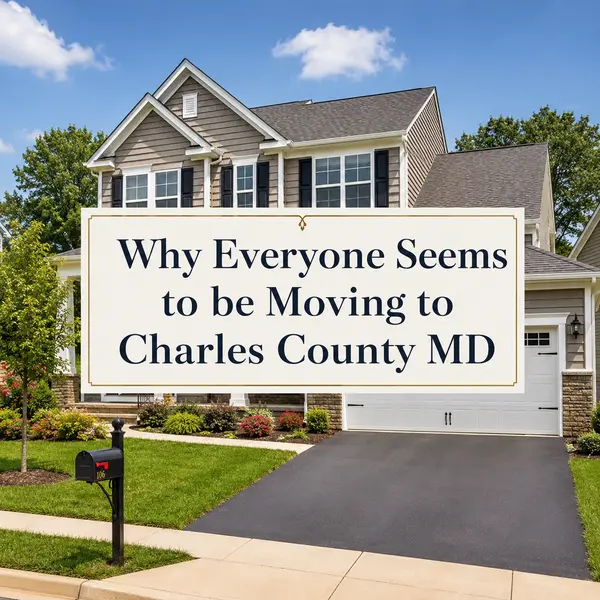

Should You Sell Your Home "As-Is" in Maryland? Your Strategic Options

Facing a major repair bill or simply pressed for time? Selling your home "As-Is" can be an appealing option, especially in the competitive Maryland real estate market. This approach means you sell your property in its current condition, without agreeing to make repairs or offer credits for defects.
However, choosing this path involves important trade-offs, and it's vital to understand the Maryland disclosure laws before putting up that sign.
Understanding "As-Is" in the Maryland Market
In Maryland, selling a home "as-is" is a common strategy, particularly for properties needing significant work, inherited homes, or for sellers prioritizing speed and convenience.
Crucially, "As-Is" does not exempt you from disclosure. Maryland law offers sellers a choice: either provide a full disclosure statement of known defects or a disclaimer statement (the "as-is" route). Even with the disclaimer, you must disclose any known latent defects that a buyer wouldn't reasonably find through a visual inspection and that pose a threat to health or safety. Honesty remains the best policy to avoid legal issues later on.
⚖️ Pros and Cons of an "As-Is" Sale
An "as-is" sale offers a clear set of advantages and disadvantages you must weigh before deciding.
| Aspect | Pros (The Benefits) | Cons (The Trade-Offs) |
| Time & Stress | Significantly Faster Closing: You skip the lengthy process of coordinating repairs, contractors, and re-inspections, especially with cash buyers who can close in weeks. | Risk of Lower Sale Price: Buyers factor in the cost of all necessary repairs, often resulting in offers that are 5% to 20% below the potential market value if the home were fully repaired. |
| Money | Zero Repair Costs: You save thousands of dollars and avoid the financial risk of costly updates, such as roof, foundation, or HVAC work. | Limited Buyer Pool: The sale attracts mostly investors, house-flippers, or cash buyers, excluding traditional buyers who need move-in ready homes or are using financing with strict condition requirements. |
| Certainty | Simplified Negotiations: The contract is generally cleaner with fewer inspection-related contingencies and negotiations after the initial offer. | Financing Challenges for Buyers: Lenders are often reluctant to finance properties with significant structural or safety issues, which can cause delays or force buyers to walk away. |
| Legality | Clear Expectations: You are explicitly stating the home's condition upfront, limiting liability for a buyer's post-closing discovery of issues (excluding undisclosed latent defects). | Ongoing Disclosure Obligations: You are still legally required to disclose all known material and latent defects. "As-is" does not shield you from litigation if you commit fraud or negligent non-disclosure. |
🛠️ Solutions for Maryland Homeowners with Needed Repairs: Beyond "As-Is"
Deciding how to handle necessary repairs is the biggest hurdle for Maryland sellers. While "As-Is" offers speed, it often costs you in price. Here are four strategic options, ranging from the least effort to the highest potential return, to help you maximize your outcome.
1. 💰 The Pure "As-Is" Sale (Least Effort, Fastest Closing)
This remains the most direct path, ideal if you need cash quickly or cannot afford any upfront costs.
-
How it Works: You list the property in its current state, making it clear you will not make repairs.
-
Best For: Properties with major, costly issues (e.g., structural, foundation, roof replacement) or sellers needing to close in a matter of weeks. It is also best for people who need to sell quickly for financial reasons.
-
Key Action: Consider obtaining a pre-listing inspection or walkthrough to identify any major defects upfront, allowing you to price the home accurately and provide full disclosure, which can mitigate risk later on.
2. 🩹 Minor, High-Impact Repairs Done Upfront (Small Investment, Higher Return)
This strategy involves spending a small amount of time and money on fixes that scare off typical buyers or are required for certain financing types.
-
How it Works: You address low-cost, high-impact items that give the impression the home is well-maintained, while still selling the property mostly "As-Is."
-
Best For: Sellers who can invest a little time/money to attract a wider buyer pool and achieve a higher price than a pure "As-Is" sale.
-
Repairs to Focus On: Fixing active leaks, non-functioning utilities (HVAC, water heater), peeling paint, or addressing significant cosmetic issues that affect curb appeal.
3. 💳 Seller Credits/Concessions at Closing (Zero Upfront Cost, Broader Appeal)
This option allows you to skip the physical repairs entirely while still making your home more affordable for the buyer.
-
How it Works: Instead of making a repair, you offer the buyer a seller credit that is deducted from your sale proceeds at closing. The buyer uses this money for their closing costs, buying down their interest rate, or making repairs after closing.
-
Best For: Homes that need repairs but are still eligible for financing. This is especially appealing to payment-sensitive buyers, as the credit reduces their cash needed at closing.
4. 🛠️ Pay-at-Closing Renovation Programs (Zero Upfront Cost, Highest Potential Price)
This service, often facilitated by a Realtor, involves a third party who completes the pre-listing renovations or updates.
-
How it Works: A vendor pays for necessary repairs and updates (e.g., new flooring, kitchen refresh) before the listing. The seller only repays the cost of the renovation at the closing table from the sale proceeds.
-
Best For: Homes that are severely outdated but in neighborhoods where fully renovated homes sell for a significantly higher price, allowing the seller to capture maximum market value.
❓ Frequently Asked Questions (FAQ)
Q: Does "As-Is" mean I don't have to disclose anything about the home's condition?
A: No. In Maryland, you still must disclose any known latent defects—material defects that a buyer could not reasonably discover by a careful visual inspection and that pose a direct threat to health or safety.
Q: Will selling "As-Is" only attract lowball cash offers?
A: While many offers will come from cash investors, listing traditionally allows you to attract a wider pool of buyers, though the price will reflect the needed repairs.
Q: Can a buyer still get a home inspection on an "As-Is" property?
A: Yes. Most buyers in Maryland include a standard inspection contingency, allowing them to inspect the property and potentially cancel the contract based on their findings, even in an "as-is" sale.
Q: What if the repairs are minor? Should I still sell "As-Is?"
A: If the repairs are purely cosmetic, addressing them yourself or offering a credit may lead to a higher final sale price. Selling "as-is" is often best reserved for properties with major, costly structural or system issues.
✅ Next Step: Start with a Professional Consultation
Deciding on the right selling strategy for your Maryland home is a significant financial and legal decision. Choosing between "As-Is," minor fixes, or a pay-at-closing renovation requires expert market analysis.
As a local realtor, I specialize in providing a Pre-Listing Consultation to help you:
-
Determine the ROI: Which repairs will actually make you money versus which ones you should skip.
-
Evaluate All Options: Walk through the pros and cons of selling "As-Is" versus using one of the financing strategies above.
-
Get an Accurate Price: Use the current condition and repair estimate to set a realistic, competitive price from day one.
Ready to maximize your sale price and minimize stress? Let's schedule your complimentary, no-obligation Pre-Listing Consultation today. [Contact Us]
Categories
- All Blogs (114)
- Affordability and Cost of Living (13)
- Andrews Air Force Base (3)
- AS IS Home Sale (3)
- Baltimore County Real Estate (1)
- Baltimore Homes (2)
- Baltimore Real Estate (2)
- Buyer Education (5)
- Buyer Guides (16)
- Buyer Representation (2)
- Buyer Resources (4)
- Buyer Strategy (11)
- buying a home (8)
- Buying a Home Near DC (6)
- Camp Springs Real Estate (1)
- Capitol Hill DC (4)
- Charles County MD (4)
- Charles County Real Estate (4)
- College Housing Strategy (1)
- Condo & Co-op Living (2)
- Condo Living (5)
- DC Commute Times (2)
- DC Home Values (7)
- DC Market Trends (7)
- DC Neighborhood Insights (9)
- DC Neighborhoods (12)
- DC Real Estate Market (25)
- DC Relocation (6)
- DC Waterfront (1)
- DMV Buyer Strategy (9)
- DMV HOAs (3)
- DMV Housing Market (6)
- DMV Market Guides (2)
- DMV Neighborhoods (7)
- dmv real estate (24)
- Dumfries VA Real Estate (2)
- Expired Listings (1)
- Fairfax County Real Estate (2)
- Financing & Mortgage Guidance (1)
- First Time Home Buyers (4)
- Fort Belvoir (1)
- Fort Detrick Military Relocation (5)
- Fort Detrick PCS (5)
- Fort Washington MD (2)
- Fort Washington MD Real Estate (1)
- Frederick County Real Estate (3)
- Georgetown DC Realty Estate (1)
- Historic DC Communities (1)
- Home Buying Advice (4)
- Home Buying Education (2)
- Home Buying in Washington DC (8)
- Home Buying Strategies (2)
- Home Buying Tips (2)
- Home Improvement ROI (2)
- Home Prep (1)
- Home Preparation for Selling (1)
- Home Selling Advice (11)
- Home Selling in Washington DC (14)
- Home Selling Process (2)
- Home Selling Strategy (8)
- Home Selling Timelines (5)
- Home Value & Pricing (1)
- Home Value Pricing & Strategy (1)
- Home Value Trends and Forecast (1)
- House Hacking & Investment (1)
- Investor Education (1)
- Local Market Insights (2)
- Luxury Adjacent Homes (1)
- Luxury Home Selling (1)
- Market Conditions (1)
- Maryland Communities (10)
- Maryland Home Buyers (15)
- Maryland Home Sellers (17)
- Maryland Home Values (1)
- Maryland Homeowners (5)
- Maryland Neighborhoods (11)
- Maryland Real Estate (30)
- Montgomery County MD (9)
- Montgomery County MD Housing Market (6)
- Mortgage and Financing (2)
- National Harbor MD (1)
- Neighborhood Guides (8)
- Net Out Sheet (1)
- New Construction Homes (1)
- Northern VA Home Buyers (17)
- Northern Virginia Buyers (15)
- Northern Virginia Home Sellers (23)
- Northern Virginia Real Estate (35)
- Oxon Hill MD (1)
- PCS Housing Guide (5)
- Petworth DC Home Prices (1)
- Petworth DC Real Estate (2)
- PG County Real Estate (6)
- Prince George’s County Real Estate (11)
- Prince William County Real Estate (5)
- Real Estate Advice (2)
- Real Estate Closings (1)
- Real Estate Contracts (1)
- Real Estate Market Insights (4)
- Real Estate Negotiation and Strategy (2)
- Real Estate Strategies for Home Sellers (9)
- Reat Estate Strategy for Sellers (7)
- Relocation & Moving to Northern Virginia (17)
- Relocation and Military Housing (17)
- Rockville MD Real Estate (1)
- Sell Maryland Home (7)
- Seller Education (14)
- Seller Resources (7)
- Seller Strategy (14)
- Seller Success Stories (1)
- Silver Spring Real Estate (2)
- Smart Buying Strategies (2)
- Southern MD Real Estate (2)
- Stafford County Real Estate (3)
- student loans (1)
- Triangle VA Real Estate (1)
- USDA Loans DMV (1)
- VA Home Loans (2)
- VA Loan Purchase (2)
- VA Market Insights and Trends (4)
- Virginia Home Selling Guide (3)
- Washington DC Real Estate (20)
- Washington DC Sellers (8)
- Wealth Building (1)
- Where to Live in Northern Virginia (8)
- Woodmore MD (1)
- Zero Down Payment Programs (1)
Recent Posts