
What High Performing Listing Agents Do Differently in the DMV

What High Performing Listing Agents Do Differently in the DMV
TLDR
- Top agents price precisely using micro-trends, not broad zip-code averages.
- They stage strategically, market aggressively, and negotiate to protect seller equity.
- Neighborhood-specific playbooks for DC, Maryland, and Virginia reduce days on market.
- Proven systems manage timing, bridge financing, and lease-backs to sell for top dollar.
What does a high performing listing agent actually do in the DMV?
The DMV market is shifting toward balanced conditions, which means skill now matters more than luck. As inventory has grown and demand has cooled, sellers cannot rely on multiple offers appearing by default. According to Bright MLS, Q4 2025 data shows active listings up year over year and average days on market rising to roughly six weeks compared to about four weeks the prior year. Median prices still ticked up about 4 to 5 percent across the region, yet negotiation leverage is no longer one sided. I watch these numbers weekly through Bright MLS MarketStats.
High performing agents adapt quickly when the market pivots. I base pricing on hyperlocal comps inside one mile or less, segment by property condition, and account for weekly absorption and showing rates. I also layer in national context to avoid chasing yesterday’s peak. The FHFA House Price Index shows appreciation moderating nationally compared with the rapid gains of 2021, which supports our local shift toward balance.
Here is how I define it as top 2% listing agent in the DMV:
- Precision pricing with MLS micro-data, not broad averages, to protect home seller equity protection.
- A marketing engine that reaches the right buyers in the first 72 hours.
- Firm, skillful negotiation focused on net proceeds, timeline, and risk control.
How do top agents price and position listings for selling for top dollar?
Pricing is a strategy, not a number. In a market where pending sales dipped and supply increased, the first two weeks are pivotal. I evaluate three to five nearest sold comps, two to four competing actives, and weekly buyer activity to set a price that lands within 1 percent of comp averages when the home is superior on condition and presentation. That is how we draw strong early interest without leaving money on the table. Learn more about pricing strategies in shifting markets in our DMV Buyer’s Market Guide.
Positioning starts with condition. I recommend a pre-list inspection for most sellers, then use a curated scope of high ROI improvements. Typical ranges: painting 2,000 to 4,500 dollars, lighting 600 to 1,200 dollars, hardware and minor carpentry 800 to 2,500 dollars, deep cleaning and landscaping 600 to 1,200 dollars. Staging in the DMV often runs 2,500 to 5,000 dollars for rowhomes and 4,000 to 9,000 dollars for larger single-family homes. In my listings, staging consistently returns two to three times its cost because it boosts photos, showings, and perceived value. Bright MLS days-on-market trends confirm that well presented homes move faster, which is vital when average DOM sits near the low 40s regionwide.
What tools separate pricing pros?
- AI-assisted CMA models that factor condition notes, not just bed-bath counts.
- Broker-only previews to collect candid feedback before public launch.
- Real-time traffic monitoring on listing portals via the MLS syndication dashboard, plus targeted social promotion.
- Neighborhood heat-maps for walkability, school proximity, and transit access, validated with sources like WMATA ridership data to highlight commuter convenience.
Which neighborhood strategies work best for DC, Maryland, and Northern Virginia sellers?
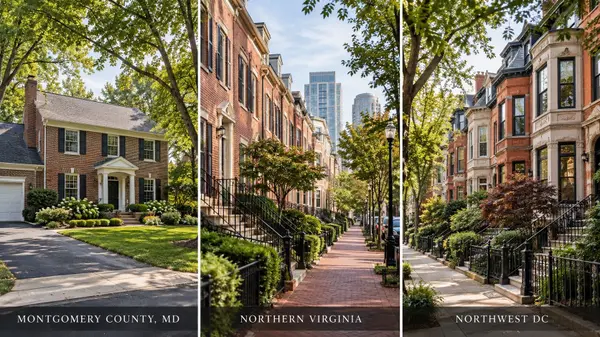
Every neighborhood needs a tailored plan. Walkable DC neighborhoods like Capitol Hill, Brookland, Logan Circle, and Petworth command a premium for renovated historic stock and close-in convenience. Bright MLS data consistently shows higher price per square foot inside the District’s inner ring, driven by walkability scores, Metro access, and amenity density. On the other hand, Reston, Bethesda, and parts of Alexandria often reward move-in-ready condition and outdoor amenities, where townhomes and single-family homes compete with newer construction. If you're considering selling in this area, learn about the nuances of Bethesda and Arlington.
- Capitol Hill
- Reston
What are the pros and cons of advanced listing tactics?
Pros:
- Broker-only previews surface pricing and condition feedback before days on market accumulate.
- Twilight photography and short-form video expand reach, especially for homes with dramatic exteriors or views.
- Targeted buyer outreach near new transit or development leverages demand driven by commuting and amenities.
Cons:
- Over-staging or over-production can delay launch and increase costs that do not always convert.
- Pushing price beyond comp-supported ceilings risks longer DOM and larger concessions later.
How do I protect equity and manage timing from prep to close?
High performing agents focus relentlessly on home seller equity protection. That starts with pre-list transparency, capped concessions in the contract, and smart use of terms like appraisal gap coverage, escalation clauses, and inspection scopes that limit risk. In a moderating market, the goal is not just a great price, it is a great price that actually closes, on your preferred timeline.
Cost planning is essential. Typical DMV prep budgets I manage range from 3,500 to 12,000 dollars for light updates that meaningfully improve presentation. Professional photography, floor plans, and a 3D tour usually cost 400 to 1,000 dollars combined, which I coordinate and front-load in many cases. If you need to buy before you sell, I will help you explore bridge loans or HELOCs through trusted lenders. National mortgage rate trends from FRED show that rates have fluctuated in the six to seven percent range recently, so timing and loan structure matter for monthly carrying costs.
One of my clients in Alexandria invested about 12,000 dollars in strategic staging, paint, and handyman work. We launched on a Thursday, hosted a broker preview, and captured multiple offers by the second weekend. The home sold in 21 days, about 7 percent above list, which exceeded their targeted net by roughly 38,000 dollars. Another of my clients in Brookland used a pre-list inspection plus a short lease-back so they could close on their new Bethesda home without paying two mortgages for months. We capped inspection credits at 1 percent, negotiated a clean appraisal, and delivered on both timing and net.
To keep your sale aligned with real buyer patterns, I watch broader DMV mobility, including transit usage. WMATA reports ridership recovering relative to 2019, which supports the continued appeal of walkable, transit-served neighborhoods. You can follow system metrics at WMATA. For sellers, that means highlighting walkability, commute times, and nearby amenities is not fluff, it is ROI.
FAQs
1) How should I price my home in a transitioning DMV market? Start with three to five sold comps within one mile and the last 90 to 120 days. Layer in two to four active competitors, then adjust for condition, parking, outdoor space, and exact micro-location. I also check weekly absorption in your price band on Bright MLS. The goal is to list inside 1 percent of comp-supported value to spark activity without underpricing.
2) When is the best time to list in DC, Maryland, or Virginia? Spring usually delivers the deepest buyer pool, especially March through June, though well prepared listings can sell year round. If you need to sell outside the peak, we tighten the launch plan with more aggressive pre-market outreach and careful pricing. Bright MLS seasonality data shows stronger showing activity in spring, yet serious buyers remain active in fall and early winter.
3) What renovations deliver the strongest return before selling? Focus on high-visibility, high-utility improvements. Fresh paint in cohesive neutrals, modern lighting, hardware updates, and minor bath tune-ups often recoup most of their cost. Full kitchen remodels rarely pay back dollar for dollar right before listing. A pre-list inspection is key to triage repairs that could derail negotiations. I build a custom ROI plan for every property and budget.
4) How do I protect my equity if buyers ask for concessions? Set clear caps before you list. I frequently structure offers with maximum credit limits, a defined scope for inspections, and appraisal strategies that reflect comps. If a concession is warranted, we trade for certainty, such as a tighter financing timeline or a higher earnest deposit. The objective is to maintain price integrity while reducing closing risk.
5) How do lease-backs and buy-before-you-sell options work? A short seller lease-back lets you close, collect proceeds, and remain in the home for a defined period while you buy the next property. For buy-before-you-sell, bridge loans or HELOCs can cover your down payment, then are paid off at closing. I coordinate timelines, lender partners, and contract terms so you do not carry double housing costs longer than necessary.
6) How long will it take to prepare and sell my home? For most rowhomes and townhomes in DC and close-in suburbs, allow two to three weeks for prep, then one to two weeks to secure a contract when priced sharply. Detached homes with larger scopes may need three to four weeks prep. With average days on market around the low 40s regionwide, top-tier presentation and early pricing precision can cut that timeline substantially.
7) How do I choose the best realtor in the DMV for my sale? Interview for neighborhood fluency, data-driven pricing, and a marketing plan that activates in the first 72 hours. Ask for list-to-sale ratio, average DOM, and marketing spend per listing. Review recent case studies with before-and-after photos and net proceeds analysis. The best realtor in the DMV should offer clear equity protection strategies, transparent communication, and strong contract negotiation.
Conclusion
High performing listing agents succeed in any cycle because they combine market data with on-the-ground execution. In today’s moderating DMV market, you need precision pricing, purposeful prep, and a launch strategy that creates urgency while protecting your equity. My approach is simple. Understand your neighborhood at a micro level, invest in only the improvements that move the needle, and negotiate terms that deliver both price and certainty. For further insights on selling your home successfully, refer to our Northern Virginia Home Selling Checklist.
Kelly Jackson is in the top 2% of Realtors in the DMV market, out of more than 25,000 agents. With 24+ years of experience as a Residential Realtor, her clients constantly proclaim that she is the top Realtor in DC and the DMV. She is known for precision pricing, strategic marketing, tough negotiation that protects seller equity and delivers results in any market cycle.
Categories
- All Blogs (116)
- Affordability and Cost of Living (13)
- Andrews Air Force Base (3)
- Arlington VA Real Estate (2)
- AS IS Home Sale (3)
- Baltimore County Real Estate (1)
- Baltimore Homes (2)
- Baltimore Real Estate (2)
- Buyer Education (5)
- Buyer Guides (16)
- Buyer Representation (2)
- Buyer Resources (4)
- Buyer Strategy (11)
- buying a home (8)
- Buying a Home Near DC (6)
- Camp Springs Real Estate (1)
- Capitol Hill DC (4)
- Charles County MD (4)
- Charles County Real Estate (4)
- College Housing Strategy (1)
- Condo & Co-op Living (2)
- Condo Living (5)
- DC Commute Times (2)
- DC Home Values (8)
- DC Market Trends (7)
- DC Neighborhood Insights (10)
- DC Neighborhoods (12)
- DC Real Estate Market (26)
- DC Relocation (6)
- DC Waterfront (1)
- DMV Buyer Strategy (9)
- DMV HOAs (3)
- DMV Housing Market (6)
- DMV Market Guides (2)
- DMV Neighborhoods (7)
- dmv real estate (25)
- Dumfries VA Real Estate (2)
- Expired Listings (1)
- Fairfax County Real Estate (3)
- Financing & Mortgage Guidance (1)
- First Time Home Buyers (4)
- Fort Belvoir (1)
- Fort Detrick Military Relocation (5)
- Fort Detrick PCS (5)
- Fort Washington MD (2)
- Fort Washington MD Real Estate (1)
- Frederick County Real Estate (3)
- Georgetown DC Realty Estate (2)
- Historic DC Communities (1)
- Home Buying Advice (4)
- Home Buying Education (2)
- Home Buying in Washington DC (8)
- Home Buying Strategies (2)
- Home Buying Tips (2)
- Home Improvement ROI (2)
- Home Prep (1)
- Home Preparation for Selling (1)
- Home Selling Advice (11)
- Home Selling in Washington DC (14)
- Home Selling Process (2)
- Home Selling Strategy (8)
- Home Selling Timelines (5)
- Home Value & Pricing (1)
- Home Value Pricing & Strategy (1)
- Home Value Trends and Forecast (1)
- House Hacking & Investment (1)
- Investor Education (1)
- Local Market Insights (2)
- Luxury Adjacent Homes (1)
- Luxury Home Selling (1)
- Market Conditions (1)
- Maryland Communities (10)
- Maryland Home Buyers (15)
- Maryland Home Sellers (17)
- Maryland Home Values (1)
- Maryland Homeowners (5)
- Maryland Neighborhoods (11)
- Maryland Real Estate (31)
- Montgomery County MD (10)
- Montgomery County MD Housing Market (7)
- Mortgage and Financing (2)
- National Harbor MD (1)
- Neighborhood Guides (8)
- Net Out Sheet (1)
- New Construction Homes (1)
- Northern VA Home Buyers (18)
- Northern Virginia Buyers (15)
- Northern Virginia Home Sellers (23)
- Northern Virginia Real Estate (36)
- Oxon Hill MD (1)
- PCS Housing Guide (5)
- Petworth DC Home Prices (1)
- Petworth DC Real Estate (2)
- PG County Real Estate (6)
- Prince George’s County Real Estate (11)
- Prince William County Real Estate (5)
- Real Estate Advice (2)
- Real Estate Closings (1)
- Real Estate Contracts (1)
- Real Estate Market Insights (4)
- Real Estate Negotiation and Strategy (2)
- Real Estate Strategies for Home Sellers (9)
- Reat Estate Strategy for Sellers (7)
- Relocation & Moving to Northern Virginia (17)
- Relocation and Military Housing (17)
- Rockville MD Real Estate (1)
- Sell Maryland Home (7)
- Seller Education (14)
- Seller Resources (7)
- Seller Strategy (14)
- Seller Success Stories (1)
- Silver Spring Real Estate (3)
- Smart Buying Strategies (2)
- Southern MD Real Estate (2)
- Stafford County Real Estate (3)
- student loans (1)
- Triangle VA Real Estate (1)
- USDA Loans DMV (1)
- VA Home Loans (2)
- VA Loan Purchase (2)
- VA Market Insights and Trends (4)
- Virginia Home Selling Guide (3)
- Washington DC Real Estate (20)
- Washington DC Sellers (8)
- Wealth Building (1)
- Where to Live in Northern Virginia (8)
- Woodmore MD (1)
- Zero Down Payment Programs (1)
Recent Posts