
Why Online Home Values Fall Apart in the DC Metro

TLDR
- DC micro-markets shift block by block, which confuses national pricing algorithms.
- Transit proximity, school lines, and condo fees drive value beyond bedroom counts.
- Use online estimates as a starting range, then validate with local MLS data.
- Pair estimates with a tailored Comparative Market Analysis (CMA), commute analysis, and on-the-ground expertise.
What is the Problem with Online Home Estimates?
Online estimates are built from large data sets that work best in areas with uniform housing. The DC region is the opposite. Prices diverge dramatically within a few blocks due to school boundaries, Metro access, historic overlays, condo fee structures, and jurisdictional tax differences. In June 2025, our metro’s median sale price hovered near $608,000 with active listings rising and months of supply around 2.4. That is a mixed market where micro-location and property type matter more than a national model can see. Bright MLS trend reports confirm more inventory and longer days on market in parts of the region, which increases pricing spread by neighborhood.
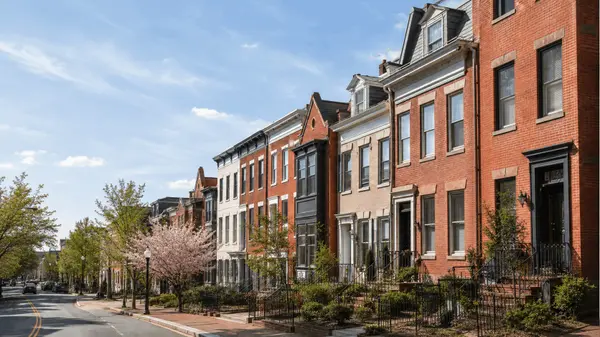
This makes broad estimates extremely unreliable for relocation buyers. A three-bedroom rowhome in Capitol Hill can sit within a different value band than an almost identical home three streets away, simply because of an elementary school boundary or a shorter walk to the Metro. Add condo fee variability, parking, and special assessments in buildings near National Landing, and algorithmic error grows quickly.
Here is how I define it as a highly experienced DMV Realtor:
- A helpful starting range, not a price or offer strategy
- A signal to investigate, not a substitute for an in-person valuation
- A tool to calibrate timing and leverage with local MLS comparables
How do online estimates work, and where do they fail in the DMV?
Most consumer estimates rely on public records, past sales, and machine learning to predict value. In a region like ours, the most powerful value drivers are not always captured in those inputs. A condo’s fee level, upcoming assessments, and parking rights can swing value by tens of thousands. So can being within a 10-minute walk of a Metro station versus a 15-minute bus ride. According to Bright MLS and local Realtor association insights, 2025 brought a rise in active listings and slightly slower absorption in several inner suburbs, which widened the dispersion between well-located and car-dependent homes.
Transit access is a prime example. Homes within walking distance of Metrorail often carry a premium relative to similar homes beyond that radius. National and local industry studies have consistently found measurable price lifts near strong transit nodes. You can review broader research on transit premiums at NAR research and statistics and ridership trends in WMATA performance reports. In our market, that premium regularly outweighs incremental square footage in car-oriented locations. Algorithms see the square footage, bed-bath counts, and sale history. They often miss the walkability and commuting time advantage that local buyers will pay for.
The condo and co-op puzzle that models miss
In Arlington, Alexandria, Bethesda, and parts of DC, a 1,000-square-foot condo might sell for less than a smaller unit in the same neighborhood if the larger unit has a much higher monthly fee or a pending assessment. Many estimates do not incorporate fee amounts or elevate them correctly in the model. Co-ops add another wrinkle with different ownership structures and financing rules. A local CMA, building-level comps, and a review of condo docs will outperform any automated estimate every time.
Which neighborhoods illustrate the gap for relocation buyers?
Neighborhoods closest to the Pentagon are the best case studies. In Crystal City, Pentagon City, and Rosslyn, walkability to the Blue and Yellow lines, retail in National Landing, and employer proximity drive persistent demand. For military families evaluating Homes near the Pentagon, a 5 to 10 minute walk to Metro can add meaningful value, especially during high-traffic commute windows. In contrast, similar-sized homes just outside the transit radius may trade at a noticeable discount even with more space.
Across the river in Bethesda, homes near Bethesda and Medical Center stations often price above larger homes in outer Montgomery County. The difference comes down to reliable transit access, school reputation, and a dense amenities core. Bright MLS stats for spring and summer show faster contract times in these walkable submarkets compared to farther-out areas, even as the regional days on market rose to roughly the mid 30s.
- Crystal City and Pentagon City
Walk to Blue and Yellow lines, Amazon HQ2 area, robust retail and parks. You must watch out for airplane noise corridors, varying condo fees, and special assessments in older buildings. Typical timeline: Condos under $700,000 can move in 2 to 4 weeks with strong pricing
- Bethesda Station Area
High-scoring schools, major medical employers, two Metro stops with frequent service. Lookout for parking constraints, school boundary nuances, older homes with system updates needed. Entry-level path: One-bedroom condos from the mid $400,000s, townhomes often from $800,000.
What are the pros and cons of using online estimates?
Pros:
- Fast way to establish a general value band and sanity check expectations
- Useful for tracking trend direction and finding outlier comps to investigate
- Easy to share among decision makers who are relocating on tight timelines
Cons:
- Miss building-level and block-level factors like fees, assessments, and overlays
- Underweight commute and transit premiums that shape DMV buyer demand
- Do not replace a local CMA, pre-list walk-through, or appraisal in a VA loan
How do I use estimates the right way as a buyer or seller?
Treat the estimate as a range and a conversation starter. Then layer in the critical local pieces that machines miss. For buyers, pull a hyperlocal CMA from Bright MLS that prioritizes building-level and block-level comps. Run a commute time analysis to Pentagon, Union Station, or your office during peak hours. Validate mortgage assumptions with current rate data from FRED 30-year mortgage rate. If you are a veteran, structure your financing strategically with VA home loans and understand how the VA appraisal process evaluates value relative to comparable sales.
For sellers, start with a walk-through and a CMA that separates your home from the nearest mismatched comps. In condos, price with fee level, reserves, and recent building sales front and center. In single family homes, highlight school assignment, parking, and verified walk times to transit. Expect a typical 30 to 45 day escrow. Appraisals often arrive 7 to 10 days after contract. Home inspections in the area often run $450 to $650. Condo document delivery and review can add 3 to 5 days in Virginia.
One of my clients, a federal procurement manager, targeted Crystal City for a walkable commute. Online estimates suggested two buildings were similar in price. After reviewing condo budgets, we found one had a pending facade assessment and significantly higher fees. We negotiated a lower price and secured a seller credit that the estimate never contemplated.
Another client, an Army family using a VA loan, needed a 30-minute car-free commute to the Pentagon. As a Military Relocation Specialist, I focused on Rosslyn and Pentagon City. The algorithm favored a larger Alexandria option farther from Metro. By quantifying the transit premium and the VA appraisal landscape, we secured a competitively priced condo near the Yellow line that matched their timeline and benefits.
If you want the Best Realtor near Pentagon to translate estimates into strategy, I am here to help.
FAQs
1) Are online estimates accurate for DC rowhomes and Arlington condos? They can be directionally helpful but often miss building-level and block-level details. In 2025, Bright MLS trend data shows larger spreads between similar-looking properties due to condo fees, assessments, and exact proximity to Metro. For a DC rowhome or an Arlington condo, a local CMA and building comps are essential to convert a rough estimate into a reliable pricing range.
2) How should military families use estimates when evaluating Homes near the Pentagon? Use estimates as a starting point, then prioritize commute modeling and building due diligence. Map walk times to the Blue and Yellow lines and bus routes to Fort Myer. For va loans, factor in the VA appraisal process and potential non-allowable fees. I provide commute heat maps and building-level comps so military families can compare payment, time savings, and resale potential realistically.
3) Do transit premiums really outweigh extra square footage in the DMV? Often yes. Industry research from organizations like NAR has long documented price resilience near strong transit networks, and local MLS results reinforce this pattern. In practice, a smaller Bethesda condo near Metro can outprice a larger home in a car-dependent area. Buyers pay for time savings and reliability, which algorithms frequently undervalue.
4) What about mortgage rate impacts on estimates this year? With 30-year fixed rates hovering in the mid-6 percent range per FRED 30-year mortgage rate, buyer power is steady but sensitive. Higher rates flatten some bidding wars and widen the spread between A-plus and B locations. Online estimates do not dynamically account for rate shifts at the neighborhood level, which is why a fresh CMA tied to current financing conditions matters.
5) Why do estimates struggle with co-ops and historic homes? Co-ops have different ownership structures, financing rules, and fee frameworks that many models do not interpret correctly. Historic homes in Capitol Hill, Old Town, or Alexandria overlays have unique renovation histories and material differences. A machine cannot read your permit file or infer craftsmanship quality. Building documents, permit reviews, and in-person evaluations provide the context that closes the accuracy gap.
6) Is now a good time to buy if I am relocating for work? Inventory has improved compared to the ultra-tight years, and months of supply near 2.4 is giving buyers modest leverage in certain submarkets, according to Bright MLS market indicators. If your move is driven by employment or PCS timing, focus on location quality, commute, and building health. Pair an estimate with a local CMA, then negotiate credits or repairs to offset rate-driven costs.
7) Which sources should I trust for market trends instead of consumer portals? Use your local MLS, your agent’s CMA, and data from accepted sources. I recommend Bright MLS market insights, FHFA House Price Index, and NAR research and statistics. For taxes and programs, check DC property tax information and county pages, plus down payment support like Montgomery County programs.
Conclusion
Online estimates are a quick compass, not a map. In the DC metro, micro-markets, transit proximity, condo finances, and school boundaries shape value in ways national models often miss. Use estimates to define a preliminary range, then lean on a hyperlocal Comparative Market Analysis (CMA), building-level comps, commute analysis, and the right lending strategy. If you are comparing Crystal City to Bethesda, or deciding between Old Town and Ballston, a refined approach can save you time and money, by translating data into a winning plan for your move.
Kelly Jackson is a top 2% Realtor serving the DC Metro Area, including Washington DC, Maryland and Northern Virginia.
Categories
- All Blogs (114)
- Affordability and Cost of Living (13)
- Andrews Air Force Base (3)
- AS IS Home Sale (3)
- Baltimore County Real Estate (1)
- Baltimore Homes (2)
- Baltimore Real Estate (2)
- Buyer Education (5)
- Buyer Guides (16)
- Buyer Representation (2)
- Buyer Resources (4)
- Buyer Strategy (11)
- buying a home (8)
- Buying a Home Near DC (6)
- Camp Springs Real Estate (1)
- Capitol Hill DC (4)
- Charles County MD (4)
- Charles County Real Estate (4)
- College Housing Strategy (1)
- Condo & Co-op Living (2)
- Condo Living (5)
- DC Commute Times (2)
- DC Home Values (7)
- DC Market Trends (7)
- DC Neighborhood Insights (9)
- DC Neighborhoods (12)
- DC Real Estate Market (25)
- DC Relocation (6)
- DC Waterfront (1)
- DMV Buyer Strategy (9)
- DMV HOAs (3)
- DMV Housing Market (6)
- DMV Market Guides (2)
- DMV Neighborhoods (7)
- dmv real estate (24)
- Dumfries VA Real Estate (2)
- Expired Listings (1)
- Fairfax County Real Estate (2)
- Financing & Mortgage Guidance (1)
- First Time Home Buyers (4)
- Fort Belvoir (1)
- Fort Detrick Military Relocation (5)
- Fort Detrick PCS (5)
- Fort Washington MD (2)
- Fort Washington MD Real Estate (1)
- Frederick County Real Estate (3)
- Georgetown DC Realty Estate (1)
- Historic DC Communities (1)
- Home Buying Advice (4)
- Home Buying Education (2)
- Home Buying in Washington DC (8)
- Home Buying Strategies (2)
- Home Buying Tips (2)
- Home Improvement ROI (2)
- Home Prep (1)
- Home Preparation for Selling (1)
- Home Selling Advice (11)
- Home Selling in Washington DC (14)
- Home Selling Process (2)
- Home Selling Strategy (8)
- Home Selling Timelines (5)
- Home Value & Pricing (1)
- Home Value Pricing & Strategy (1)
- Home Value Trends and Forecast (1)
- House Hacking & Investment (1)
- Investor Education (1)
- Local Market Insights (2)
- Luxury Adjacent Homes (1)
- Luxury Home Selling (1)
- Market Conditions (1)
- Maryland Communities (10)
- Maryland Home Buyers (15)
- Maryland Home Sellers (17)
- Maryland Home Values (1)
- Maryland Homeowners (5)
- Maryland Neighborhoods (11)
- Maryland Real Estate (30)
- Montgomery County MD (9)
- Montgomery County MD Housing Market (6)
- Mortgage and Financing (2)
- National Harbor MD (1)
- Neighborhood Guides (8)
- Net Out Sheet (1)
- New Construction Homes (1)
- Northern VA Home Buyers (17)
- Northern Virginia Buyers (15)
- Northern Virginia Home Sellers (23)
- Northern Virginia Real Estate (35)
- Oxon Hill MD (1)
- PCS Housing Guide (5)
- Petworth DC Home Prices (1)
- Petworth DC Real Estate (2)
- PG County Real Estate (6)
- Prince George’s County Real Estate (11)
- Prince William County Real Estate (5)
- Real Estate Advice (2)
- Real Estate Closings (1)
- Real Estate Contracts (1)
- Real Estate Market Insights (4)
- Real Estate Negotiation and Strategy (2)
- Real Estate Strategies for Home Sellers (9)
- Reat Estate Strategy for Sellers (7)
- Relocation & Moving to Northern Virginia (17)
- Relocation and Military Housing (17)
- Rockville MD Real Estate (1)
- Sell Maryland Home (7)
- Seller Education (14)
- Seller Resources (7)
- Seller Strategy (14)
- Seller Success Stories (1)
- Silver Spring Real Estate (2)
- Smart Buying Strategies (2)
- Southern MD Real Estate (2)
- Stafford County Real Estate (3)
- student loans (1)
- Triangle VA Real Estate (1)
- USDA Loans DMV (1)
- VA Home Loans (2)
- VA Loan Purchase (2)
- VA Market Insights and Trends (4)
- Virginia Home Selling Guide (3)
- Washington DC Real Estate (20)
- Washington DC Sellers (8)
- Wealth Building (1)
- Where to Live in Northern Virginia (8)
- Woodmore MD (1)
- Zero Down Payment Programs (1)
Recent Posts