
The First Week on the Market Matters More Than Ever in DC, MD and VA

When a home goes live, the clock starts immediately, and the first seven days carry more weight than the entire rest of the listing period combined. That has always been true in real estate. What has changed is how much is now riding on those days. In the DMV market of 2026, getting the first week right is no longer a nice advantage to have. It is often the difference between a clean sale close to asking and a listing that quietly drifts into the growing pile of homes buyers have stopped paying attention to.
The homes that win are rarely the ones with the lowest price or the fanciest finishes. They are the ones that are positioned correctly the moment they hit the market, because that is when buyer attention is at its absolute peak.
What the data actually shows right now
The numbers coming out of the region tell a clear story. Across Northern Virginia, the average days on market climbed to roughly 30 days in early 2026, a jump of more than 36 percent compared to the year before. Active inventory is up by double digits, which means buyers have more choices and they are taking more time to make decisions. Bright MLS has described 2026 as a reset year rather than a rebound year, and that framing matters for anyone preparing to sell.
Here is the part that should change how every seller thinks about timing. Recent Bright MLS data for Fairfax County found that buyer demand is heavily concentrated in the first two weeks a home is listed. Only about 17 percent of new contracts are happening after a home has been on the market for 21 days or more. At the same time, roughly half of active listings have already crossed that 21 day line, and more than a third are sitting past 30 days, averaging close to three months before they sell.
Read that again, because it is the whole point. The market is quietly splitting into two groups. There are fresh listings that capture nearly all of the serious buyer activity, and there is everything else. The first week is how you stay in the first group.
Why the window is smaller and the stakes are higher
When inventory was scarce and buyers were desperate, a slightly off price or a few weak photos could be forgiven, because there was simply nothing else to choose from. That cushion is gone. As inventory rises, the spotlight on a brand new listing burns brighter than ever, but it also burns out faster. Every day a home sits, more new competition arrives to steal that attention.
There is also the way buyers shop now. Most people build their shortlist online long before they ever schedule a showing. They filter by price, scroll through photos in seconds, and decide in a glance whether a home makes the cut. If the price is even slightly high for the condition, or the photos do not do the home justice, buyers never add it to the list. The early traffic spike that should have generated showings gets wasted, and you cannot get those first impressions back.
The penalty for missing the window has also grown sharper. Once a home pushes past two or three weeks with no offer, buyers start to assume something is wrong with it, even when nothing is. They wonder what other people saw that scared them off. That assumption then becomes a negotiating tool against the seller, and the conversation shifts from how much over asking to how much can be talked off the price.
What a strong first week looks like
A home that is priced right and presented well from day one tends to follow a very different path. Showing requests cluster in the opening days, often filling the calendar within the first 48 to 72 hours. Multiple buyers move through quickly, they sense the competition, and that pressure pushes offers toward the asking price and sometimes above it. Momentum builds on itself. Buyers want what other buyers want, and a busy first weekend signals that this is a home worth acting on.
That early energy is the seller's single greatest source of leverage. It is far easier to negotiate from a position of strong demand in week one than to claw back interest in week five.
What a weak first week costs
When the first week comes and goes with little activity, the options narrow fast. A price reduction usually becomes necessary, and reductions made later carry a stigma that the original price never would have. Time on the market keeps climbing, the listing loses its newness, and most of the active buyers in that price band have already seen it and passed. The seller ends up chasing the market downward instead of setting the terms. In almost every case, the home that nails week one nets more money and sells faster than the identical home that limped out of the gate.
How Kelly Jackson approaches the most important week
This is where Kelly's approach is shaped by something personal. Back in 1999, before she ever held a license, Kelly and her husband Keith were on the losing end of a real estate deal where an agent deliberately limited their home's exposure to serve someone else's interest. She only understood what had happened years later, after earning her own license. That experience is the reason exposure and honest positioning sit at the center of everything KJAX Group does for sellers.
Kelly treats the first week as a campaign that is fully built before the sign ever goes in the yard. Pricing is set against real market data for the specific neighborhood and price band, not a hopeful number. Presentation and photography are handled so the home looks its best in the exact place buyers are scrolling. Exposure is maximized across every channel rather than quietly contained. And once the listing is live, showing feedback and online traffic are tracked closely and shared with sellers honestly, so any needed adjustment happens while the home is still fresh rather than after the window has closed.
The DMV is not one market
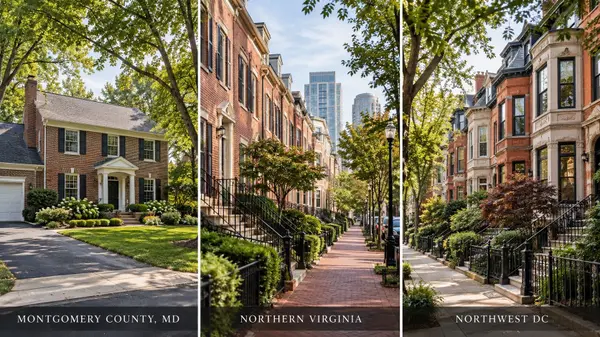
One more thing worth understanding. The DMV is not a single housing market, and the first week behaves differently across it. A townhome in Prince William County, a condo near Capitol Hill, and a single family home in Montgomery County each have their own buyer pool, their own pricing logic, and their own rhythm. National headlines about a slowing market often have very little to do with what is actually happening on a given street. Pricing and timing the first week correctly takes someone who reads the local data block by block, which is exactly the work Kelly and Keith Jackson do across DC, Maryland, and Virginia every day.
Frequently asked questions
How important is the first week a home is on the market?
It is the most important week of the entire selling process. Buyer attention and showing activity peak the moment a home goes live, and recent regional data shows that the large majority of contracts come together inside the first two weeks. How a home is priced and presented during that window sets the trajectory for everything that follows.
What happens if my house doesn't sell in the first week?
A quiet first week is the market giving you feedback. Most often the issue is price relative to condition, sometimes it is presentation or marketing reach. The key is to catch it early, because adjustments made while a home is still new carry far less stigma than reductions made after it has been sitting. Kelly and Keith tracks showing and online activity closely so those conversations happen at the right time.
Should I lower my price after the first week?
Not automatically. The right move depends on what the showing traffic and feedback are telling you. If interest is strong but offers are not coming, the fix may be presentation or terms rather than price. If activity is low across the board, a thoughtful adjustment while the listing is still fresh is usually wiser than waiting. Kelly walks every seller through the data before recommending any change.
How many showings should I expect in the first week in the DMV?
For a home priced correctly, several showings in the opening days is healthy, and a well positioned listing often fills its weekend calendar within the first few days. Far fewer than that is an early signal worth examining right away. To talk through what is realistic for your specific home and neighborhood, call Kelly directly at 240.385.9905.
Why are homes taking longer to sell in 2026?
Inventory has risen across the region, which gives buyers more choices and more time to decide. Bright MLS has called this a reset year. The result is a market that increasingly splits between fresh listings that capture most of the demand and older listings that accumulate. That divide is exactly why the first week now carries more weight than it has in years.
Ready to make your first week count?
If you are thinking about selling anywhere in the DMV, the planning that determines your first week starts well before the listing goes live. Kelly Jackson and KJAX Group at Samson Properties have guided more than 1,600 sellers across DC, Maryland, and Virginia, and they would be happy to build a strategy around your home and your timeline. Call or text Kelly at 240.385.9905 or email kellysellsdmv@gmail.com to start the conversation.
If you are selling on military orders or a PCS timeline, the first week matters even more, because you rarely have the luxury of a slow market. Kelly holds the Military Relocation Professional certification and helps service members across the DMV sell on a deadline. See her Military Relocation resources to learn more.
Categories
- All Blogs (116)
- Affordability and Cost of Living (13)
- Andrews Air Force Base (3)
- Arlington VA Real Estate (2)
- AS IS Home Sale (3)
- Baltimore County Real Estate (1)
- Baltimore Homes (2)
- Baltimore Real Estate (2)
- Buyer Education (5)
- Buyer Guides (16)
- Buyer Representation (2)
- Buyer Resources (4)
- Buyer Strategy (11)
- buying a home (8)
- Buying a Home Near DC (6)
- Camp Springs Real Estate (1)
- Capitol Hill DC (4)
- Charles County MD (4)
- Charles County Real Estate (4)
- College Housing Strategy (1)
- Condo & Co-op Living (2)
- Condo Living (5)
- DC Commute Times (2)
- DC Home Values (8)
- DC Market Trends (7)
- DC Neighborhood Insights (10)
- DC Neighborhoods (12)
- DC Real Estate Market (26)
- DC Relocation (6)
- DC Waterfront (1)
- DMV Buyer Strategy (9)
- DMV HOAs (3)
- DMV Housing Market (6)
- DMV Market Guides (2)
- DMV Neighborhoods (7)
- dmv real estate (25)
- Dumfries VA Real Estate (2)
- Expired Listings (1)
- Fairfax County Real Estate (3)
- Financing & Mortgage Guidance (1)
- First Time Home Buyers (4)
- Fort Belvoir (1)
- Fort Detrick Military Relocation (5)
- Fort Detrick PCS (5)
- Fort Washington MD (2)
- Fort Washington MD Real Estate (1)
- Frederick County Real Estate (3)
- Georgetown DC Realty Estate (2)
- Historic DC Communities (1)
- Home Buying Advice (4)
- Home Buying Education (2)
- Home Buying in Washington DC (8)
- Home Buying Strategies (2)
- Home Buying Tips (2)
- Home Improvement ROI (2)
- Home Prep (1)
- Home Preparation for Selling (1)
- Home Selling Advice (11)
- Home Selling in Washington DC (14)
- Home Selling Process (2)
- Home Selling Strategy (8)
- Home Selling Timelines (5)
- Home Value & Pricing (1)
- Home Value Pricing & Strategy (1)
- Home Value Trends and Forecast (1)
- House Hacking & Investment (1)
- Investor Education (1)
- Local Market Insights (2)
- Luxury Adjacent Homes (1)
- Luxury Home Selling (1)
- Market Conditions (1)
- Maryland Communities (10)
- Maryland Home Buyers (15)
- Maryland Home Sellers (17)
- Maryland Home Values (1)
- Maryland Homeowners (5)
- Maryland Neighborhoods (11)
- Maryland Real Estate (31)
- Montgomery County MD (10)
- Montgomery County MD Housing Market (7)
- Mortgage and Financing (2)
- National Harbor MD (1)
- Neighborhood Guides (8)
- Net Out Sheet (1)
- New Construction Homes (1)
- Northern VA Home Buyers (18)
- Northern Virginia Buyers (15)
- Northern Virginia Home Sellers (23)
- Northern Virginia Real Estate (36)
- Oxon Hill MD (1)
- PCS Housing Guide (5)
- Petworth DC Home Prices (1)
- Petworth DC Real Estate (2)
- PG County Real Estate (6)
- Prince George’s County Real Estate (11)
- Prince William County Real Estate (5)
- Real Estate Advice (2)
- Real Estate Closings (1)
- Real Estate Contracts (1)
- Real Estate Market Insights (4)
- Real Estate Negotiation and Strategy (2)
- Real Estate Strategies for Home Sellers (9)
- Reat Estate Strategy for Sellers (7)
- Relocation & Moving to Northern Virginia (17)
- Relocation and Military Housing (17)
- Rockville MD Real Estate (1)
- Sell Maryland Home (7)
- Seller Education (14)
- Seller Resources (7)
- Seller Strategy (14)
- Seller Success Stories (1)
- Silver Spring Real Estate (3)
- Smart Buying Strategies (2)
- Southern MD Real Estate (2)
- Stafford County Real Estate (3)
- student loans (1)
- Triangle VA Real Estate (1)
- USDA Loans DMV (1)
- VA Home Loans (2)
- VA Loan Purchase (2)
- VA Market Insights and Trends (4)
- Virginia Home Selling Guide (3)
- Washington DC Real Estate (20)
- Washington DC Sellers (8)
- Wealth Building (1)
- Where to Live in Northern Virginia (8)
- Woodmore MD (1)
- Zero Down Payment Programs (1)
Recent Posts