
How Commute Patterns in the DMV Shape Home Prices More Than Square Footage

TLDR
- Metro access and 30-minute commutes often add 18-22 percent price premiums.
- June 2025 inventory rose to 2.4 months, easing bidding pressure near transit.
- Relocation buyers prioritize time-to-work over extra rooms or lot size.
- Military families value predictable commutes, VA loans, and resale near bases.
What does commute-driven pricing really mean in the DMV?
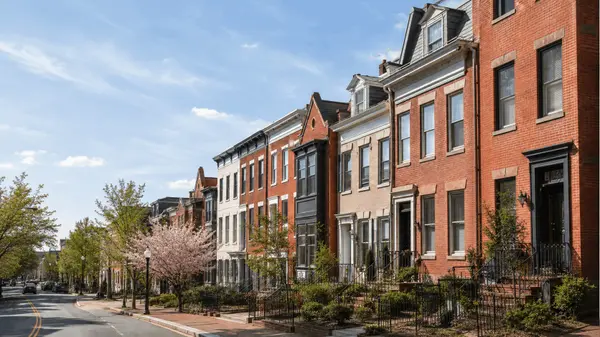
In the Washington DC region, commute convenience is not a bonus feature. It is a value driver that rivals kitchens and square footage. Across Arlington, Alexandria, Montgomery County, and the District, homes within a half mile of a Metrorail station typically command noticeable premiums over similarly sized homes farther from rail. That pattern intensified as the region’s job centers concentrated along the Blue, Yellow, Orange, and Red lines.
Local conditions support this premium. By June 2025, the DC metro reached roughly 2.4 months of supply, with a meaningful increase in active listings compared to last year. That inventory bump helped buyers negotiate, yet the most transit-connected listings still moved quickly at near full price. Average weekday rail ridership also rebounded to hundreds of thousands, reinforcing the daily importance of time-to-work for buyers who split days between office and home. See Bright MLS market reports and WMATA performance reports for context.
Here is how I define the impact of commute times on DC home prices:
- Commute time within 30 minutes to major hubs consistently outvalues an extra bedroom.
- A 0.5 mile walk to Metro can outweigh 400 to 800 extra square feet.
- Predictable access to job nodes improves liquidity and long-run resale prospects.
How does proximity to transit outweigh square footage in today’s market?
When buyers ask me why a smaller condo near Pentagon City costs more than a larger townhome 10 miles out, I point to the time math. A reliable 20 to 30 minute commute five days a week saves hours weekly. That time is embedded in pricing. Regional analysis by local MLS and national trade groups shows that walkable, rail-adjacent homes earn premiums even in periods of rising rates. The DMV’s station areas around National Landing, Rosslyn-Ballston, Bethesda, and Downtown DC remain case studies.
A common rule of thumb I see in Bright MLS data and buyer behavior is an 18 to 22 percent premium for homes within a short walk to rail compared with otherwise similar options beyond walking distance. Buyers routinely trade 300 to 600 square feet for a station-area address. NAR’s consumer surveys also show a preference for walkability and shorter commutes, especially among younger professionals and families balancing school schedules. See NAR community and transportation preferences and Bright MLS market updates.
Why the premium persists even as supply rises
Even with supply up in 2026, the DMV has few truly walkable, transit-rich micro-neighborhoods. Zoning, limited parcels, and high construction costs constrain new inventory near stations. At the same time, employers continue to cluster near rail and major bus corridors. The scarcity of station-proximate properties, paired with stable demand, keeps premiums durable relative to extra space farther out.
Which neighborhoods show commute premiums over size for relocation buyers?
If you are relocating for the Pentagon, Capitol Hill, downtown agencies, or Tysons offices, you will see these tradeoffs quickly. In Arlington’s National Landing and Rosslyn-Ballston corridors, smaller condos or compact townhomes often price higher relative to their interior square footage because the commute is a 1 to 3 stop ride. In Bethesda near the Red Line, a 1,200 to 1,400 square foot home in a station area can price alongside a 1,800 to 2,000 square foot home in farther-out suburbs.
Blue and Yellow lines, walk to HQs, Amazon’s National Landing, extensive retail. HOA and condo fees can be higher than average, and there is often limited guest parking. Typical timeline: 30 to 45 days to close, 10 to 14 days to secure lender docs.
- Bethesda near the Red Line
Strong schools, downtown amenities, quick Red Line access to DC employment. There is competition for renovated homes, appraisal scrutiny on premium pricing. Entry-level path: Older condos or smaller townhomes, often needing cosmetic updates.
Other standouts include Clarendon and Ballston for nightlife and short Orange/Silver Line rides, Rosslyn for direct Blue/Orange/Silver access, Old Town Alexandria for VRE and Yellow Line options, and Silver Spring for Red Line proximity at more approachable prices. For families, Arlington’s Washington-Liberty zone and Montgomery County’s magnet clusters draw sustained demand tied to both commute and school quality.
What are the pros and cons of prioritizing commute over size?
Pros:
- Faster door-to-door trips reduce stress and weekly time lost in traffic.
- Historically stronger resale liquidity near rail and bus hubs.
- Lower car dependency can cut transportation costs and insurance.
Cons:
- Higher price per square foot and potential HOA or condo fees.
- Limited inventory creates competition for updated listings.
How do I plan and budget for a commute-first purchase in the DMV?
Start with a time budget, not just a dollar budget. I map your target commute windows to Pentagon, Navy Yard, L’Enfant, Farragut, or Tysons. Then I align neighborhoods that deliver 20 to 35 minute trips by rail or bike. I benchmark likely premiums versus comparable homes beyond walking distance. In 2025 conditions, the region shows about 2.4 months of supply, so buyers have modest leverage to negotiate repairs or small concessions in many submarkets. See Bright MLS monthly reports.
Financing matters. Many military families secure VA loans with 0 percent down and no PMI, which can help offset higher price-per-foot near stations. As a Military Relocation Specialist and the Best Realtor near Pentagon for many of my clients, I coach you on contract structures that make VA offers win, including appraisal gap strategies, appraisal reconsiderations of value, and flexible rent-backs for sellers. Conventional buyers should pre-approve with lenders experienced in condos, warrantability, and local condo review nuances.
Expect closing costs of roughly 2.5 to 3.5 percent of the purchase price, depending on jurisdiction. Property tax effective rates vary by county, generally about 0.80 percent to 1.04 percent regionwide. Inspections typically occur within 5 to 7 days, loan commitments at day 18 to 25, and closings at day 30 to 45. For out-of-state or overseas buyers, I routinely conduct live video tours, record platform walk-throughs, and provide commute heat maps. WMATA’s reports show improving rail reliability, which supports the long-term rationale for transit-adjacent investments. Review WMATA performance data for updates.
One of my clients moved from San Francisco to Crystal City for a federal procurement role. We chose a smaller condo steps from the Yellow Line. The 15 minute door-to-door to the Pentagon outweighed losing a den. They later leveraged the building’s strong comps to refinance when rates dipped.
Another client, a tech couple, debated a larger Gaithersburg townhome versus a smaller Bethesda condo. We modeled commute costs and time. They chose Bethesda near the Red Line, paid a premium, and gained higher weekend walkability. Three years later, despite market ups and downs, their resale inquiries remain steady due to location.
FAQs
1) Do homes near Metro really sell for more than larger homes farther out? Yes, in many DMV submarkets. Station-adjacent homes often carry 18 to 22 percent premiums over similar non-station options, driven by commute savings, walkability, and limited supply near rail. Bright MLS trends and NAR consumer research both point to enduring demand for transit access. Even as regional inventory improved in 2025, the premium persisted because supply at stations remains constrained.
2) Can I reach the Pentagon in under 30 minutes without a car? Often yes. From Pentagon City, Crystal City, Rosslyn, Clarendon, and parts of Alexandria and Capitol Hill, the Pentagon is reachable via Blue or Yellow Line trains and frequent bus service. I map door-to-door timings including station walks and transfer risks. WMATA’s reliability metrics have improved, which has increased buyer confidence in rail commutes. See WMATA ridership and reliability.
3) How competitive are VA loans near stations like Pentagon City and Rosslyn? Very competitive with the right strategy. VA loans offer no PMI and flexible down payments, which helps military families pursue Homes near the Pentagon. I structure offers with strong earnest money, tight inspection timelines, and appraisal preparation. If a valuation comes in low, I coordinate reconsiderations using the best comps. Positioning and communication can make a VA offer stand out.
4) Will federal layoff cycles make Arlington or Montgomery County more volatile? Historically, both hold value due to diversified employment, strong schools, and transit. Short-term listing spikes can occur during uncertain periods, yet the long-run appeal of Arlington’s Rosslyn-Ballston corridor and Montgomery’s Red Line hubs supports pricing. FHFA’s House Price Index shows the DC metro tracking mid single digit trends in recent years. See FHFA House Price Index.
5) Is now a good time to buy if inventory rose to 2.4 months in June 2025? It can be. That level offers modest buyer leverage compared to ultra-competitive periods. Near-station homes still command attention, but you may negotiate repairs or concessions, especially if a listing lingers beyond two weeks. Rate buydowns and closing cost credits are back on the table in select listings. I assess each micro-market by days on market and list-to-sale ratios from Bright MLS.
6) Why do online price estimates miss the mark inside city and close-in suburbs? Micro-neighborhood variation is intense. Two blocks can change school zones, Metro walk times, or condo rules. Automated models often miss these hyperlocal factors. I pair MLS data with on-the-ground context like building reserves, special assessments, and upcoming infrastructure work. That blend narrows value ranges and helps avoid appraisal surprises in areas with complex housing stock. Learn more about online price estimation inaccuracies.
7) How do I choose between a larger home in Silver Spring and a smaller place in Bethesda? Start with commute requirements, school preferences, and budget. If a 25 minute Red Line ride is essential, Bethesda may justify the premium. If space and yard matter more, Silver Spring offers value with good transit access. I will show time-cost tradeoffs, HOA differences, and potential resale profiles. Many buyers test both during two weekend tours before deciding.
Conclusion
In the DMV, time is a currency that factors into pricing. Homes near rail and reliable bus lines often beat larger homes farther out because predictable commutes, walkability, and daily convenience are scarce and highly valued. For military families using VA loans, or any relocation buyers prioritizing Homes near the Pentagon, the right plan can secure location and maintain resale strength. If you want a guide who understands this market, I am here to help.
Kelly Jackson is a top 2% DC Metro Realtor with over 24 years of experience and a deep specialization in commute-based pricing and location strategy throughout the DMV.
Categories
- All Blogs (114)
- Affordability and Cost of Living (13)
- Andrews Air Force Base (3)
- AS IS Home Sale (3)
- Baltimore County Real Estate (1)
- Baltimore Homes (2)
- Baltimore Real Estate (2)
- Buyer Education (5)
- Buyer Guides (16)
- Buyer Representation (2)
- Buyer Resources (4)
- Buyer Strategy (11)
- buying a home (8)
- Buying a Home Near DC (6)
- Camp Springs Real Estate (1)
- Capitol Hill DC (4)
- Charles County MD (4)
- Charles County Real Estate (4)
- College Housing Strategy (1)
- Condo & Co-op Living (2)
- Condo Living (5)
- DC Commute Times (2)
- DC Home Values (7)
- DC Market Trends (7)
- DC Neighborhood Insights (9)
- DC Neighborhoods (12)
- DC Real Estate Market (25)
- DC Relocation (6)
- DC Waterfront (1)
- DMV Buyer Strategy (9)
- DMV HOAs (3)
- DMV Housing Market (6)
- DMV Market Guides (2)
- DMV Neighborhoods (7)
- dmv real estate (24)
- Dumfries VA Real Estate (2)
- Expired Listings (1)
- Fairfax County Real Estate (2)
- Financing & Mortgage Guidance (1)
- First Time Home Buyers (4)
- Fort Belvoir (1)
- Fort Detrick Military Relocation (5)
- Fort Detrick PCS (5)
- Fort Washington MD (2)
- Fort Washington MD Real Estate (1)
- Frederick County Real Estate (3)
- Georgetown DC Realty Estate (1)
- Historic DC Communities (1)
- Home Buying Advice (4)
- Home Buying Education (2)
- Home Buying in Washington DC (8)
- Home Buying Strategies (2)
- Home Buying Tips (2)
- Home Improvement ROI (2)
- Home Prep (1)
- Home Preparation for Selling (1)
- Home Selling Advice (11)
- Home Selling in Washington DC (14)
- Home Selling Process (2)
- Home Selling Strategy (8)
- Home Selling Timelines (5)
- Home Value & Pricing (1)
- Home Value Pricing & Strategy (1)
- Home Value Trends and Forecast (1)
- House Hacking & Investment (1)
- Investor Education (1)
- Local Market Insights (2)
- Luxury Adjacent Homes (1)
- Luxury Home Selling (1)
- Market Conditions (1)
- Maryland Communities (10)
- Maryland Home Buyers (15)
- Maryland Home Sellers (17)
- Maryland Home Values (1)
- Maryland Homeowners (5)
- Maryland Neighborhoods (11)
- Maryland Real Estate (30)
- Montgomery County MD (9)
- Montgomery County MD Housing Market (6)
- Mortgage and Financing (2)
- National Harbor MD (1)
- Neighborhood Guides (8)
- Net Out Sheet (1)
- New Construction Homes (1)
- Northern VA Home Buyers (17)
- Northern Virginia Buyers (15)
- Northern Virginia Home Sellers (23)
- Northern Virginia Real Estate (35)
- Oxon Hill MD (1)
- PCS Housing Guide (5)
- Petworth DC Home Prices (1)
- Petworth DC Real Estate (2)
- PG County Real Estate (6)
- Prince George’s County Real Estate (11)
- Prince William County Real Estate (5)
- Real Estate Advice (2)
- Real Estate Closings (1)
- Real Estate Contracts (1)
- Real Estate Market Insights (4)
- Real Estate Negotiation and Strategy (2)
- Real Estate Strategies for Home Sellers (9)
- Reat Estate Strategy for Sellers (7)
- Relocation & Moving to Northern Virginia (17)
- Relocation and Military Housing (17)
- Rockville MD Real Estate (1)
- Sell Maryland Home (7)
- Seller Education (14)
- Seller Resources (7)
- Seller Strategy (14)
- Seller Success Stories (1)
- Silver Spring Real Estate (2)
- Smart Buying Strategies (2)
- Southern MD Real Estate (2)
- Stafford County Real Estate (3)
- student loans (1)
- Triangle VA Real Estate (1)
- USDA Loans DMV (1)
- VA Home Loans (2)
- VA Loan Purchase (2)
- VA Market Insights and Trends (4)
- Virginia Home Selling Guide (3)
- Washington DC Real Estate (20)
- Washington DC Sellers (8)
- Wealth Building (1)
- Where to Live in Northern Virginia (8)
- Woodmore MD (1)
- Zero Down Payment Programs (1)
Recent Posts