
How Condo Fees and HOA Financials Impact Home Values in the DMV

TLDR
- Healthy reserves and transparent budgets keep condos warrantable and values resilient.
- Higher fees can support amenities and insurance, often boosting buyer demand and resale.
- Weak reserves or litigation triggers non-warrantable status, depressing values and financing.
- DC, Maryland, and Northern Virginia buyers must underwrite HOAs like lenders do.
What does Condo Fees and HOA Financial Impact really mean?
For any DC Home Buyer considering DMV condos, the monthly fee is only the headline. The fine print is the association’s financial strength. Lenders and appraisers look at reserve funding, delinquency rates, insurance coverage, litigation, and commercial space mix. These factors determine whether a building is warrantable under Fannie Mae and Freddie Mac guidelines, which directly affects buyer demand and resale values.
In 2025, the broader D.C. metro has more listings and slightly more breathing room. Bright MLS reported active listings up nearly 30 percent year over year in February and months of supply rising to 1.64, yet new pending sales declined as buyers recalibrated expectations. Even with shifting demand, well-run buildings near Dupont Circle, Logan Circle, West End, and Foggy Bottom remain competitive because strong HOA health supports financing and appraisals. Across the region, the median price trend has held firm, with Northern Virginia’s median at $685,000 in January per NVAR Market Statistics, compared to a national median near the low four hundreds per NAR Research and Statistics. HOA quality is a key reason certain buildings outperform.
Here is how I define the impact of condo fees and HOA financials:
- HOA financials determine warrantability, which influences buyer pool size and appraised value.
- Fees reflect services, reserves, and risk management, not just amenities or age.
- Strong associations weather market shifts better and protect resale in all price brackets.
How do condo fees and reserves influence lending and appraisals in the DMV?
Conventional lenders rely on Fannie Mae and Freddie Mac criteria. After Surfside, scrutiny increased. Buildings are typically expected to allocate at least 10 percent of their annual budget to reserves, maintain at least 50 percent owner occupancy, keep commercial space to roughly a third or less, avoid material litigation or structural concerns, and hold robust master insurance including adequate coverage for wind, flood where applicable, and building ordinance or law. You can track project status updates and guidance through the Fannie Mae Condo Tool.
If a building fails these benchmarks, it can be deemed non-warrantable. That often pushes buyers to specialty or non-QM financing with higher rates and larger down payments, which shrinks demand and can knock buyers out of the pool. Appraisers also review HOA health and can adjust value when risk is evident in the budget, special assessments, or deferred maintenance. In a market where 30-year mortgage rates have hovered around the mid 6s to low 7s in 2025 per FRED, an extra rate premium for non-warrantable loans changes monthly affordability, pricing, and time on market.
What do appraisers look for?
Appraisers review condo questionnaires, budgets, reserve studies, meeting minutes, and master insurance. They evaluate the sustainability of fees against the level of services and the age of systems like roofs, elevators, and façades. Strong reserves reduce the likelihood of sudden assessments. When reserves are weak, appraisers know buyers will demand discounts or walk, especially if litigation or structural issues are disclosed.
Where in DC, Maryland, and Northern Virginia are fees helping or hurting values?
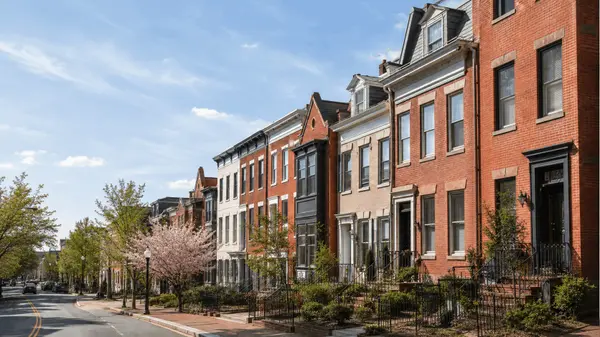
Near my office at 1050 Connecticut Ave NW, I see patterns repeat. In Dupont Circle and Logan Circle, historic buildings often carry higher monthly fees that include utilities, full-time staffing, and robust insurance. Buyers value the convenience and stability, and those buildings tend to see steady demand even as supply rises. In newer West End and Foggy Bottom communities, modern systems keep fees moderate early on, but the best run associations still budget 10 percent to reserves, which supports long-term value.
- Dupont Circle and Logan Circle
- Details: Older buildings with concierge, included utilities, and well-funded reserves. - Watchouts: Vintage infrastructure may require periodic special assessments for roofs or masonry. - Typical timeline: 30 to 45 days to close with conventional financing when warrantable.
- Capitol Riverfront and Navy Yard
- Details: Mixed-use projects with amenities like pools, gyms, and rooftops near the ballpark. - Watchouts: Higher commercial components can impact warrantability if thresholds are exceeded. - Entry-level path: Studio and one-bedroom units offer lower entry price points with full amenities.
Across the region, Bright MLS reported condo inventory up materially in 2025, giving buyers more choices. In Bethesda, Rockville, and Chevy Chase, where Maryland Real Estate is driven by top schools and transit, well-run associations command premiums even when monthly fees are higher. In Arlington’s Rosslyn-Ballston corridor, buyers aiming to Buy a home in Northern Virginia prioritize walkability, Metrorail access, and amenity maintenance records. Buildings that transparently fund reserves and share recent reserve studies are moving quickly, particularly near Clarendon and Courthouse stations.
What are the pros and cons of higher condo fees for buyers?
Pros:
- Well-funded reserves reduce surprise assessments and support stronger resale values.
- Better amenities and maintenance attract more buyers, widening the future buyer pool.
- Strong master insurance and risk management protect the building during disruptive events.
Cons:
- Higher monthly fees raise debt ratios and can limit loan approval amounts.
- Poorly structured fees without adequate reserves signal future assessments or deferred maintenance.
How do I evaluate an HOA and protect my purchase?
You should underwrite the building like a lender. Review the last two years of budgets, current reserve balance, reserve study, meeting minutes, and master insurance certificate. Ask whether at least 10 percent of the budget is going to reserves and whether any structural or safety issues have been identified. Confirm owner occupancy, investor concentration, delinquency rates, and pending litigation. I also compare projected capital needs to the reserve study’s funding trajectory to estimate the risk of future assessments.
Request documents early. In DC, buyers typically have a limited period after receiving the resale package to cancel, so speed matters. In Virginia and Maryland, there are similar statutory review windows on resale disclosures. Expect 30 to 40 days from contract to close on warrantable condos, and 35 to 50 days if the building requires additional lender review or specialized financing. Typical DC condo fees range from roughly $400 to $600 per month for full-service buildings, with boutique associations sometimes lower. Special assessments, when they occur, often run several thousand dollars and can be amortized or paid at settlement depending on bylaws.
One of my clients in Capitol Hill secured a one-bedroom condo that had a 12 percent reserve allocation and no litigation. Because the building clearly met GSE criteria, we used a conventional loan and closed in 30 days. Another client in Clarendon loved a loft building, but the association had active façade litigation. We pivoted quickly, identified a nearby warrantable building with similar amenities, and negotiated a credit for minor repairs, keeping the monthly payment and timeline intact.
If you are using first time home buyer programs, align them with building type from the start. DC Open Doors, the Maryland Mortgage Program, and Virginia Housing grants can stretch your down payment, but many programs require conventional or FHA financing. Confirm the building’s warrantability early and verify your program layering. Start here:
FAQs
1) What condo fee level is “too high” for resale? There is no magic number. The key is value for services and reserves. A $750 fee that covers utilities, concierge, reserves, and insurance in Dupont Circle might preserve value better than a $350 fee that underfunds reserves. Appraisers and buyers judge the sustainability and transparency of the budget. I look for a clear 10 percent reserve allocation and documented capital planning.
2) Can higher fees actually increase my condo’s value? Yes, when fees fund strong reserves, staffing, and insurance that keep the property in top condition. Buyers pay for predictability, especially in older buildings in Logan Circle or Kalorama. Higher fees tied to meaningful services can reduce risk and protect resale. The market punishes weak reserves more than it punishes well-justified fees, particularly in competitive submarkets with low months of supply.
3) What makes a building warrantable or non-warrantable? Conventional warrantability generally requires adequate reserves, at least half owner-occupied units, limited commercial space, no major litigation or structural issues, and strong master insurance. If a building fails these tests, buyers face higher rates or larger down payments through specialty lenders. That reduces the buyer pool and can pressure values. Check the Fannie Mae Condo Tool and verify with your lender.
4) How do I check reserve health without being a CPA? Look for the percentage of the annual budget dedicated to reserves, the current reserve balance, and the age of big-ticket systems. Review the most recent reserve study. Compare planned capital projects with reserve funding levels to estimate assessment risk. Meeting minutes reveal patterns such as roof leaks, elevator repairs, or façade issues. I summarize these findings for clients in a simple risk score before we write an offer.
5) Are special assessments common in DC, Maryland, and Northern Virginia? They occur across the region. Older buildings in Dupont Circle or Foggy Bottom may assess for roof replacement or tuck-pointing. Newer buildings can assess for warranty gaps or amenity repairs. Amounts vary from a few thousand dollars to much more when major systems are involved. The best defense is a funded reserve plan and recent studies. If an assessment is pending, we negotiate credits or price adjustments.
6) Is now a good time to buy given more inventory? Bright MLS reported active listings up sharply year over year in early 2025, and months of supply improved to roughly 1.6. More choices help buyers compare HOAs and select stronger buildings. Rates remain a headwind per FRED, so focusing on warrantable buildings keeps financing costs down. In my practice, good HOA financials trump market noise when it comes to long-term value.
7) How do fees affect my loan approval and debt ratios? Lenders include condo fees in your monthly debt-to-income calculation. A higher fee can lower your maximum purchase price. However, if the building is warrantable and you secure a competitive rate, the overall monthly payment may still fit with a smart strategy. I often model two or three neighborhoods, comparing fee structures and rates so you can choose the strongest long-term combination.
Conclusion
The bottom line Condo fees tell only part of the story. HOA financials, reserves, insurance, and governance determine warrantability, which directly shapes buyer demand, appraisals, and resale values across the DMV. In neighborhoods near Dupont Circle, Logan Circle, and throughout Northern Virginia and Montgomery County, well-funded associations consistently outperform. Use market data from Bright MLS Research and NVAR Market Statistics, track rates via FRED, and align early with first time home buyer programs. If you want to buy a home in Northern Virginia or navigate Maryland Real Estate, I will help you evaluate the HOA like a pro and protect your investment. Learn more about CFPB condo/HOA dues inclusion for complete financial insight.
Written by Kelly Jackson, a top 2 percent DMV real estate professional with experience across Washington DC, Maryland, and Northern Virginia.
Categories
- All Blogs (114)
- Affordability and Cost of Living (13)
- Andrews Air Force Base (3)
- AS IS Home Sale (3)
- Baltimore County Real Estate (1)
- Baltimore Homes (2)
- Baltimore Real Estate (2)
- Buyer Education (5)
- Buyer Guides (16)
- Buyer Representation (2)
- Buyer Resources (4)
- Buyer Strategy (11)
- buying a home (8)
- Buying a Home Near DC (6)
- Camp Springs Real Estate (1)
- Capitol Hill DC (4)
- Charles County MD (4)
- Charles County Real Estate (4)
- College Housing Strategy (1)
- Condo & Co-op Living (2)
- Condo Living (5)
- DC Commute Times (2)
- DC Home Values (7)
- DC Market Trends (7)
- DC Neighborhood Insights (9)
- DC Neighborhoods (12)
- DC Real Estate Market (25)
- DC Relocation (6)
- DC Waterfront (1)
- DMV Buyer Strategy (9)
- DMV HOAs (3)
- DMV Housing Market (6)
- DMV Market Guides (2)
- DMV Neighborhoods (7)
- dmv real estate (24)
- Dumfries VA Real Estate (2)
- Expired Listings (1)
- Fairfax County Real Estate (2)
- Financing & Mortgage Guidance (1)
- First Time Home Buyers (4)
- Fort Belvoir (1)
- Fort Detrick Military Relocation (5)
- Fort Detrick PCS (5)
- Fort Washington MD (2)
- Fort Washington MD Real Estate (1)
- Frederick County Real Estate (3)
- Georgetown DC Realty Estate (1)
- Historic DC Communities (1)
- Home Buying Advice (4)
- Home Buying Education (2)
- Home Buying in Washington DC (8)
- Home Buying Strategies (2)
- Home Buying Tips (2)
- Home Improvement ROI (2)
- Home Prep (1)
- Home Preparation for Selling (1)
- Home Selling Advice (11)
- Home Selling in Washington DC (14)
- Home Selling Process (2)
- Home Selling Strategy (8)
- Home Selling Timelines (5)
- Home Value & Pricing (1)
- Home Value Pricing & Strategy (1)
- Home Value Trends and Forecast (1)
- House Hacking & Investment (1)
- Investor Education (1)
- Local Market Insights (2)
- Luxury Adjacent Homes (1)
- Luxury Home Selling (1)
- Market Conditions (1)
- Maryland Communities (10)
- Maryland Home Buyers (15)
- Maryland Home Sellers (17)
- Maryland Home Values (1)
- Maryland Homeowners (5)
- Maryland Neighborhoods (11)
- Maryland Real Estate (30)
- Montgomery County MD (9)
- Montgomery County MD Housing Market (6)
- Mortgage and Financing (2)
- National Harbor MD (1)
- Neighborhood Guides (8)
- Net Out Sheet (1)
- New Construction Homes (1)
- Northern VA Home Buyers (17)
- Northern Virginia Buyers (15)
- Northern Virginia Home Sellers (23)
- Northern Virginia Real Estate (35)
- Oxon Hill MD (1)
- PCS Housing Guide (5)
- Petworth DC Home Prices (1)
- Petworth DC Real Estate (2)
- PG County Real Estate (6)
- Prince George’s County Real Estate (11)
- Prince William County Real Estate (5)
- Real Estate Advice (2)
- Real Estate Closings (1)
- Real Estate Contracts (1)
- Real Estate Market Insights (4)
- Real Estate Negotiation and Strategy (2)
- Real Estate Strategies for Home Sellers (9)
- Reat Estate Strategy for Sellers (7)
- Relocation & Moving to Northern Virginia (17)
- Relocation and Military Housing (17)
- Rockville MD Real Estate (1)
- Sell Maryland Home (7)
- Seller Education (14)
- Seller Resources (7)
- Seller Strategy (14)
- Seller Success Stories (1)
- Silver Spring Real Estate (2)
- Smart Buying Strategies (2)
- Southern MD Real Estate (2)
- Stafford County Real Estate (3)
- student loans (1)
- Triangle VA Real Estate (1)
- USDA Loans DMV (1)
- VA Home Loans (2)
- VA Loan Purchase (2)
- VA Market Insights and Trends (4)
- Virginia Home Selling Guide (3)
- Washington DC Real Estate (20)
- Washington DC Sellers (8)
- Wealth Building (1)
- Where to Live in Northern Virginia (8)
- Woodmore MD (1)
- Zero Down Payment Programs (1)
Recent Posts