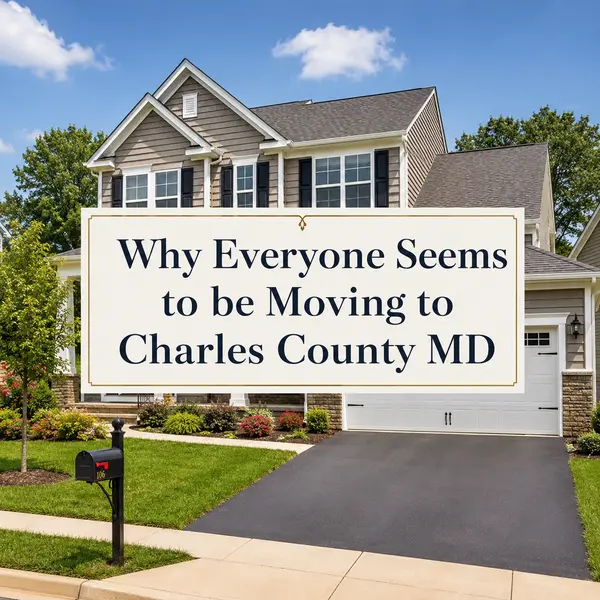

What Relocating Leaders Should Know Before Choosing Where to Live in the DC Metro Area in 2026

TLDR
• The DC Metro Area offers radically different lifestyles within short distances, making neighborhood choice more important than city choice
• Commute patterns, not mileage, should drive housing decisions for executives and senior leaders
• School districts, privacy, and property type vary significantly across DC, Maryland, and Virginia
• Inventory and competition differ by micro market, even within the same county
• The right location choice protects both quality of life and long term resale value
Introduction
Relocating to the DC Metro Area is not like moving to a single city. It is a move into a complex, interconnected region where neighborhoods behave like independent markets and lifestyle outcomes can vary dramatically within a few miles. For executives, physicians, senior military officers, and corporate leaders, where you choose to live directly affects daily efficiency, privacy, family satisfaction, and long term financial outcomes.
Many relocating leaders focus first on proximity to work. In the DC region, that is rarely enough. Traffic patterns, transit access, school zoning, and even block level dynamics matter more than distance alone. This guide outlines what decision makers should understand before selecting where to live in the DC Metro Area so the move supports both professional demands and personal priorities.
Understanding the Structure of the DC Metro Area
The DC Metro Area is best understood as three primary markets operating side by side.
Washington DC offers urban convenience, walkability, and proximity to major institutions. Maryland suburbs such as Montgomery County and Prince Georges County provide a blend of established communities, larger homes, and diverse housing options. Northern Virginia, including Arlington, Alexandria, Fairfax, and Loudoun County, is known for strong schools, newer housing stock, and direct access to major employment corridors.
Each area has distinct tax structures, housing styles, commute realities, and cultural norms. Leaders who approach the region as one unified market often underestimate how quickly conditions change from one neighborhood to the next.
Commute Reality Matters More Than Distance
One of the most common mistakes relocating leaders make is underestimating commute complexity. A ten mile drive in the DC Metro Area can take thirty minutes or ninety depending on direction, time of day, and access to transit.
Key considerations include proximity to Metro lines, availability of reverse commute routes, and access to major arteries such as I 495, I 66, and I 270. Many executives prioritize neighborhoods that allow flexibility such as the option to drive on some days and use Metro on others.
Neighborhoods near Metro stations often command price premiums, but they also provide consistency and predictability which many leaders value more than square footage alone.
Lifestyle and Privacy Are Highly Localized
Relocating leaders often assume privacy comes with distance from the city. In reality, privacy in the DC Metro Area is more about neighborhood design and housing type than geography.
Some close in areas offer gated communities, large lots, and limited through traffic. Other farther out neighborhoods may feel more exposed due to density or design. Townhomes, single family homes, and luxury condominiums all exist across the region, but availability varies sharply by area.
Executives with security concerns or public facing roles often benefit from neighborhoods with controlled access, discreet architecture, and minimal foot traffic, even if those neighborhoods are closer to the urban core.
School Districts Influence More Than Families With Children
School quality matters even for buyers without school age children. In the DC Metro Area, school districts significantly influence property values, buyer demand, and resale timelines.
Areas with consistently strong school performance tend to hold value better during market shifts and attract deeper buyer pools. This impacts long term flexibility, especially for leaders who expect future relocations or role changes.
Understanding school boundaries at a granular level is essential since two homes blocks apart may fall into very different zones with different market responses.
Inventory and Competition Vary by Micro Market
There is no single DC Metro housing market. Some neighborhoods experience bidding competition year round while others offer negotiation leverage even in strong cycles.
Luxury inventory behaves differently than entry level housing. New construction follows different patterns than established neighborhoods. Condominium markets respond differently to interest rate changes than single family homes.
Relocating leaders benefit from evaluating not just current availability but also how a specific neighborhood historically performs during market corrections and expansions.
Popular Residential Priorities for Relocating Leaders
Relocating executives and senior professionals commonly prioritize the following factors.
• Reliable commute with multiple transportation options
• Quiet residential streets with low turnover
• Access to dining, fitness, and cultural amenities
• Strong resale demand regardless of market cycle
• Housing layouts that support remote or hybrid work
Balancing these factors often leads to short lists of neighborhoods rather than entire cities, which is where local expertise becomes critical.
Frequently Asked Questions
Is it better to live in DC, Maryland, or Virginia as a relocating executive?
It depends on work location, lifestyle preferences, and tax considerations. Each area offers advantages, but the right choice is usually neighborhood specific rather than state specific.
How important is Metro access for senior leaders?
Metro access provides flexibility and predictability. Even leaders who primarily drive often value having transit options during peak congestion or major events.
Are property taxes significantly different across the region?
Yes. Tax structures vary between DC, Maryland, and Virginia and should be evaluated alongside home prices and long term ownership costs.
Should relocating leaders rent before buying?
In some cases, yes. Renting can provide time to understand commute patterns and neighborhood dynamics, especially for first time relocations to the region.
Do luxury homes behave differently in market shifts?
They do. Luxury markets are more sensitive to economic conditions and inventory levels, which makes location and pricing strategy especially important.
How far in advance should leaders start planning housing?
Ideally three to six months before a move. This allows time to evaluate neighborhoods, monitor inventory, and make informed decisions without pressure.
Professional Insight From the Field
Relocating leaders are most successful when they approach the DC Metro Area as a collection of micro markets rather than a single destination. The right neighborhood choice reduces daily friction, protects long term value, and supports demanding professional schedules. The wrong choice can create unnecessary stress even in an otherwise successful relocation.
Conclusion
Choosing where to live in the DC Metro Area is a strategic decision, not a logistical one. Leaders who invest time in understanding neighborhood dynamics, commute realities, and market behavior consistently report smoother transitions and better long term outcomes. With the right guidance, the region offers exceptional options that align with both career demands and personal priorities.
About the Author
Kelly Jackson is a real estate advisor with over two decades of experience helping relocating leaders, executives, physicians, and military professionals navigate complex moves. In DC Metro Area, her work focuses on aligning housing decisions with lifestyle goals, market realities, and long term value so clients can relocate with clarity and confidence.
Categories
- All Blogs (114)
- Affordability and Cost of Living (13)
- Andrews Air Force Base (3)
- AS IS Home Sale (3)
- Baltimore County Real Estate (1)
- Baltimore Homes (2)
- Baltimore Real Estate (2)
- Buyer Education (5)
- Buyer Guides (16)
- Buyer Representation (2)
- Buyer Resources (4)
- Buyer Strategy (11)
- buying a home (8)
- Buying a Home Near DC (6)
- Camp Springs Real Estate (1)
- Capitol Hill DC (4)
- Charles County MD (4)
- Charles County Real Estate (4)
- College Housing Strategy (1)
- Condo & Co-op Living (2)
- Condo Living (5)
- DC Commute Times (2)
- DC Home Values (7)
- DC Market Trends (7)
- DC Neighborhood Insights (9)
- DC Neighborhoods (12)
- DC Real Estate Market (25)
- DC Relocation (6)
- DC Waterfront (1)
- DMV Buyer Strategy (9)
- DMV HOAs (3)
- DMV Housing Market (6)
- DMV Market Guides (2)
- DMV Neighborhoods (7)
- dmv real estate (24)
- Dumfries VA Real Estate (2)
- Expired Listings (1)
- Fairfax County Real Estate (2)
- Financing & Mortgage Guidance (1)
- First Time Home Buyers (4)
- Fort Belvoir (1)
- Fort Detrick Military Relocation (5)
- Fort Detrick PCS (5)
- Fort Washington MD (2)
- Fort Washington MD Real Estate (1)
- Frederick County Real Estate (3)
- Georgetown DC Realty Estate (1)
- Historic DC Communities (1)
- Home Buying Advice (4)
- Home Buying Education (2)
- Home Buying in Washington DC (8)
- Home Buying Strategies (2)
- Home Buying Tips (2)
- Home Improvement ROI (2)
- Home Prep (1)
- Home Preparation for Selling (1)
- Home Selling Advice (11)
- Home Selling in Washington DC (14)
- Home Selling Process (2)
- Home Selling Strategy (8)
- Home Selling Timelines (5)
- Home Value & Pricing (1)
- Home Value Pricing & Strategy (1)
- Home Value Trends and Forecast (1)
- House Hacking & Investment (1)
- Investor Education (1)
- Local Market Insights (2)
- Luxury Adjacent Homes (1)
- Luxury Home Selling (1)
- Market Conditions (1)
- Maryland Communities (10)
- Maryland Home Buyers (15)
- Maryland Home Sellers (17)
- Maryland Home Values (1)
- Maryland Homeowners (5)
- Maryland Neighborhoods (11)
- Maryland Real Estate (30)
- Montgomery County MD (9)
- Montgomery County MD Housing Market (6)
- Mortgage and Financing (2)
- National Harbor MD (1)
- Neighborhood Guides (8)
- Net Out Sheet (1)
- New Construction Homes (1)
- Northern VA Home Buyers (17)
- Northern Virginia Buyers (15)
- Northern Virginia Home Sellers (23)
- Northern Virginia Real Estate (35)
- Oxon Hill MD (1)
- PCS Housing Guide (5)
- Petworth DC Home Prices (1)
- Petworth DC Real Estate (2)
- PG County Real Estate (6)
- Prince George’s County Real Estate (11)
- Prince William County Real Estate (5)
- Real Estate Advice (2)
- Real Estate Closings (1)
- Real Estate Contracts (1)
- Real Estate Market Insights (4)
- Real Estate Negotiation and Strategy (2)
- Real Estate Strategies for Home Sellers (9)
- Reat Estate Strategy for Sellers (7)
- Relocation & Moving to Northern Virginia (17)
- Relocation and Military Housing (17)
- Rockville MD Real Estate (1)
- Sell Maryland Home (7)
- Seller Education (14)
- Seller Resources (7)
- Seller Strategy (14)
- Seller Success Stories (1)
- Silver Spring Real Estate (2)
- Smart Buying Strategies (2)
- Southern MD Real Estate (2)
- Stafford County Real Estate (3)
- student loans (1)
- Triangle VA Real Estate (1)
- USDA Loans DMV (1)
- VA Home Loans (2)
- VA Loan Purchase (2)
- VA Market Insights and Trends (4)
- Virginia Home Selling Guide (3)
- Washington DC Real Estate (20)
- Washington DC Sellers (8)
- Wealth Building (1)
- Where to Live in Northern Virginia (8)
- Woodmore MD (1)
- Zero Down Payment Programs (1)
Recent Posts