
Is it better to sell now or wait until interest rates come down in the DMV?

TLDR
- Inventory is rising while demand normalizes, giving buyers leverage and motivated sellers opportunity.
- Rates in the low to mid 6s keep affordability tight, yet prices remain resilient across submarkets.
- Listing sooner avoids competing with a larger wave of spring and 2026 sellers.
- Smart prep, accurate pricing, and strong marketing drive top-dollar outcomes despite rate uncertainty.
What does “timing the market” really mean for DMV home sellers?
Timing the market is about balancing today’s pricing power with tomorrow’s competition. In the D.C. metro, the median sold price reached roughly $630,000 in November 2025, about 5 percent higher than a year earlier, according to regional MLS reporting. Inventory is rising, active listings reached about 9,142 and climbed more than 30 percent year over year, yet supply remains historically lean by long term standards. That mix explains why values have been durable while days on market lengthen.
In practical terms, you are weighing two moving parts. First, affordability is improving only incrementally as mortgage rates hover in the mid 6s. Second, months of supply has risen to roughly 1.5, which is still a seller-skewed number but trending more balanced. If you need to sell in the next 6 to 12 months, your window may actually be stronger now than if you wait to list alongside a larger cohort of would-be movers.
Here is how I define it as Kelly Jackson:
- Maximize your net by pairing realistic pricing with standout presentation and syndication.
- List into lower competition periods when buyers are serious and inventory is thinner.
- Align your sale with a purchase strategy that offsets higher rates, like buydowns or assumption.
How do interest rates and inventory shape the decision in the DMV?
Interest rates directly affect how many qualified buyers can bid on your home. The national 30-year fixed rate has recently tracked in the low to mid 6 percent range based on the Federal Reserve’s FRED series for mortgage rates, which is an improvement from peaks but still a headwind for many buyers. When rates are steady rather than falling fast, buyer urgency is driven more by life events than by payment relief, which means your marketing and pricing do more of the heavy lifting than macro tailwinds alone.
At the same time, our dmv real estate market is adding supply. Regional MLS data shows active listings up about 33.7 percent year over year in November 2025, with months of supply rising to roughly 1.48, about a 41 percent jump. Average days on market moved to around 29 days, up more than 30 percent. Buyers are asking for repairs and negotiating more often, yet well prepared listings still attract multiple offers at the right price.
A final piece is the local forecast. Bright MLS has cautioned that 2026 could bring a slight median price decline in the D.C. region, near 1 percent. If rates do not drop sharply, sellers who wait may face stiffer competition as more owners list their homes for sale. If you plan to sell your dmv home in 2025 or early 2026, you may find that listing sooner captures stronger pricing and avoids a bigger crowd.
Links for your reference include:
What if rates fall in 2026?
If rates ease, more buyers show up, which is good for demand. However, more sellers also reenter the market, which dilutes your advantage. Historically, modest rate declines lower payments but do not automatically create bidding frenzies unless supply is extremely tight. In rising inventory conditions, better marketing and accurate pricing usually produce more reliable outcomes than waiting for a rate swing.
Which DC neighborhoods are giving sellers the best options right now?
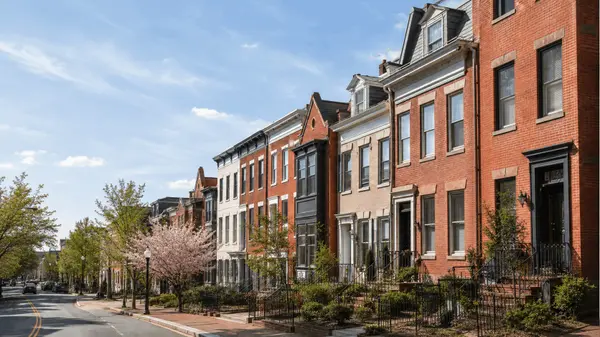
Dupont Circle, Logan Circle, West End, Kalorama, Georgetown, Shaw and Foggy Bottom in DC are showing strong recovery signs, while area such as Arlington and Alexandria in VA and Silver Spring, Rockville and Laurel in MD continue to hold steady. Walkability, Metro access and proximity to employers and universities are attractive areas for buyers. That convenience premium supports pricing even when rates are higher. The tradeoff is a longer average days on market compared to the absolute fastest-selling suburbs.
- Dupont Circle
- Logan Circle
- Georgetown
- Shaw
Across close-in submarkets, the fastest-selling areas like Arlington’s Clarendon or Bethesda often average 15 to 20 days due to transit and school demand, while D.C. proper commonly ranges from 30 to 45 days. Regional MLS reporting supports this spread and the overall trend that well prepared homes still move quickly even as the market balances.
What are the pros and cons of selling now versus waiting?
Pros:
- Rising inventory today is still historically lean, your well executed seller listing can stand out.
- Prices remain resilient, with the D.C. metro median around $630,000, up about 5 percent year over year.
- Avoid joining a larger wave of listings if more owners unlock from low rates in 2026.
- Today’s rates can be offset with buydowns, concessions or loan assumptions when you purchase next.
Cons:
- If rates drop meaningfully, more buyers could support stronger pricing in select segments.
- Longer days on market mean buyers negotiate harder, inspections and credits are more common.
How do I build a data-driven seller listing plan for top dollar?
Success comes from preparation, pricing, and promotion. Start with a pre-list walkthrough, then a two to four week prep plan that prioritizes high impact, moderate cost updates. I typically recommend fresh paint, lighting updates, minor kitchen or bath refresh, and curb appeal improvements. For many downtown condos, decluttering plus targeted staging achieves the biggest lift. The National Association of REALTORS research indicates basic cosmetic updates and professional presentation are among the highest return items for sellers.
Typical costs in close-in D.C. neighborhoods:
- Interior painting for a 1,200 to 1,600 square foot home: $3,000 to $5,000
- Staging for a 1 to 2 bedroom condo or small rowhome: $2,000 to $6,000 per 60 to 90 days
- Deep clean, window washing, minor handyman items: $500 to $1,500
- Professional photography, floor plans, virtual tour: $500 to $800
- Landscaping and planters for small front yards or patios: $400 to $1,200
Pricing is everything. In this dmv real estate market, homes aligned within a tight range of recent comparable sales sell faster and require fewer price reductions. I build a pricing window, then test early buyer feedback in the first week. If we see strong views and showings but weak offers, we adjust quickly rather than lingering. Your net typically improves with speed and clarity.
Marketing should be relentless and digital first. My listings include professional media, full syndication through the MLS, targeted social and search ads, a dedicated property site, and pre-market email to my buyer and agent network. I measure engagement daily and share a dashboard so you see what buyers see.
One of my clients in Logan Circle faced a move for a new job. We listed in late January rather than wait for spring. With light competition, we staged the condo, priced just inside the comp range, and negotiated two strong offers in 10 days. Another client in Georgetown considered a full kitchen remodel. Instead, we opted for cabinet paint, new hardware, lighting, and a mid-range appliance package. That $12,000 refresh delivered strong photos and a swift sale at a price the full remodel was unlikely to beat.
Helpful references:
FAQs
1) Will waiting for lower rates get me a higher price? Not necessarily. If rates drift down, more buyers show up, but more sellers also return. Bright MLS expects a modestly more balanced market into 2026. A slight price dip is possible, about 1 percent regionally, which suggests timing your sale to lower competition and strong presentation can outperform a wait and see strategy.
2) How long will it take to sell near Dupont or Logan Circle? Plan for 25 to 35 days if your pricing and presentation are on point. Boutique condos with strong finishes, parking, and outdoor space can move faster. Historic rowhomes often require a bit more time due to inspections and financing. Regional MLS reporting shows D.C. proper averaging roughly 30 to 45 days as the market balances.
3) What is the best time to sell in the city? Spring attracts the most buyers, but it also brings the most competition. Winter and early Q1 can be the best time to sell if your goal is standing out. Serious buyers are still active, transfer season is underway, and you avoid the April to June rush of new listings. With a strong launch, you can outperform spring on net proceeds.
4) Should I renovate before listing or sell as is? Focus on cost-effective updates with broad appeal. Fresh paint, lighting, hardware, and landscaping usually deliver outsized returns compared to full gut projects. Unless your home is severely outdated or distressed, large custom renovations risk over-improvement. I will map a room-by-room plan with estimated costs, buyer impact, and expected ROI for your specific property.
5) How do I handle being locked into a sub 4 percent mortgage? You have options. Consider negotiating a seller credit toward the buyer’s rate buydown to boost your sale price and liquidity for your next purchase. Explore assumptions if your loan allows it. On the buy side, temporary and permanent buydowns, ARMs with caps, or new construction incentives can narrow the payment gap while you leverage your equity.
6) What price strategies work best as days on market rise? Start within a tight range of the most recent, relevant comps and monitor early traffic. If you see strong online views and showings but no offers in the first 10 to 14 days, adjust swiftly rather than chase the market later. Strategic price positioning paired with high quality presentation often draws multiple offers even when average days on market increases.
7) Will concessions hurt my net proceeds? Used strategically, concessions can protect value. A 2 to 3 percent credit toward the buyer’s closing costs or rate buydown can be cheaper than a large price cut and may expand the qualified buyer pool. The key is to model net outcomes both ways and negotiate credits that prioritize your bottom line and timeline.
Conclusion
The bottom line If you plan to sell your dmv home in the next year, now is a compelling time to prepare and list. Inventory is up but still lean, prices hold firm, and days on market are manageable with smart strategy. Waiting for materially lower rates could bring more buyers, yet it is also likely to bring more competing listings. The best time to sell is when you can present a move-in ready home, price precisely, and execute a full marketing plan that meets buyers where they are. I will help you do exactly that.
Categories
- All Blogs (114)
- Affordability and Cost of Living (13)
- Andrews Air Force Base (3)
- AS IS Home Sale (3)
- Baltimore County Real Estate (1)
- Baltimore Homes (2)
- Baltimore Real Estate (2)
- Buyer Education (5)
- Buyer Guides (16)
- Buyer Representation (2)
- Buyer Resources (4)
- Buyer Strategy (11)
- buying a home (8)
- Buying a Home Near DC (6)
- Camp Springs Real Estate (1)
- Capitol Hill DC (4)
- Charles County MD (4)
- Charles County Real Estate (4)
- College Housing Strategy (1)
- Condo & Co-op Living (2)
- Condo Living (5)
- DC Commute Times (2)
- DC Home Values (7)
- DC Market Trends (7)
- DC Neighborhood Insights (9)
- DC Neighborhoods (12)
- DC Real Estate Market (25)
- DC Relocation (6)
- DC Waterfront (1)
- DMV Buyer Strategy (9)
- DMV HOAs (3)
- DMV Housing Market (6)
- DMV Market Guides (2)
- DMV Neighborhoods (7)
- dmv real estate (24)
- Dumfries VA Real Estate (2)
- Expired Listings (1)
- Fairfax County Real Estate (2)
- Financing & Mortgage Guidance (1)
- First Time Home Buyers (4)
- Fort Belvoir (1)
- Fort Detrick Military Relocation (5)
- Fort Detrick PCS (5)
- Fort Washington MD (2)
- Fort Washington MD Real Estate (1)
- Frederick County Real Estate (3)
- Georgetown DC Realty Estate (1)
- Historic DC Communities (1)
- Home Buying Advice (4)
- Home Buying Education (2)
- Home Buying in Washington DC (8)
- Home Buying Strategies (2)
- Home Buying Tips (2)
- Home Improvement ROI (2)
- Home Prep (1)
- Home Preparation for Selling (1)
- Home Selling Advice (11)
- Home Selling in Washington DC (14)
- Home Selling Process (2)
- Home Selling Strategy (8)
- Home Selling Timelines (5)
- Home Value & Pricing (1)
- Home Value Pricing & Strategy (1)
- Home Value Trends and Forecast (1)
- House Hacking & Investment (1)
- Investor Education (1)
- Local Market Insights (2)
- Luxury Adjacent Homes (1)
- Luxury Home Selling (1)
- Market Conditions (1)
- Maryland Communities (10)
- Maryland Home Buyers (15)
- Maryland Home Sellers (17)
- Maryland Home Values (1)
- Maryland Homeowners (5)
- Maryland Neighborhoods (11)
- Maryland Real Estate (30)
- Montgomery County MD (9)
- Montgomery County MD Housing Market (6)
- Mortgage and Financing (2)
- National Harbor MD (1)
- Neighborhood Guides (8)
- Net Out Sheet (1)
- New Construction Homes (1)
- Northern VA Home Buyers (17)
- Northern Virginia Buyers (15)
- Northern Virginia Home Sellers (23)
- Northern Virginia Real Estate (35)
- Oxon Hill MD (1)
- PCS Housing Guide (5)
- Petworth DC Home Prices (1)
- Petworth DC Real Estate (2)
- PG County Real Estate (6)
- Prince George’s County Real Estate (11)
- Prince William County Real Estate (5)
- Real Estate Advice (2)
- Real Estate Closings (1)
- Real Estate Contracts (1)
- Real Estate Market Insights (4)
- Real Estate Negotiation and Strategy (2)
- Real Estate Strategies for Home Sellers (9)
- Reat Estate Strategy for Sellers (7)
- Relocation & Moving to Northern Virginia (17)
- Relocation and Military Housing (17)
- Rockville MD Real Estate (1)
- Sell Maryland Home (7)
- Seller Education (14)
- Seller Resources (7)
- Seller Strategy (14)
- Seller Success Stories (1)
- Silver Spring Real Estate (2)
- Smart Buying Strategies (2)
- Southern MD Real Estate (2)
- Stafford County Real Estate (3)
- student loans (1)
- Triangle VA Real Estate (1)
- USDA Loans DMV (1)
- VA Home Loans (2)
- VA Loan Purchase (2)
- VA Market Insights and Trends (4)
- Virginia Home Selling Guide (3)
- Washington DC Real Estate (20)
- Washington DC Sellers (8)
- Wealth Building (1)
- Where to Live in Northern Virginia (8)
- Woodmore MD (1)
- Zero Down Payment Programs (1)
Recent Posts